Disability insurance in Canada: What it is and how it works

Disability insurance is an income replacement policy that pays you a tax-free monthly benefit if an illness or injury prevents you from working. In Canada, disability insurance is available through employer group plans, association plans, and individual policies you buy yourself. This guide explains exactly how disability insurance works in Canada.

What is disability insurance in Canada?

Disability insurance is an income‑replacement coverage that pays you a monthly benefit if an illness or injury prevents you from working and earning your usual income. It’s designed to help you continue paying your bills, debt payments, and everyday expenses when your paycheque stops but your costs do not.

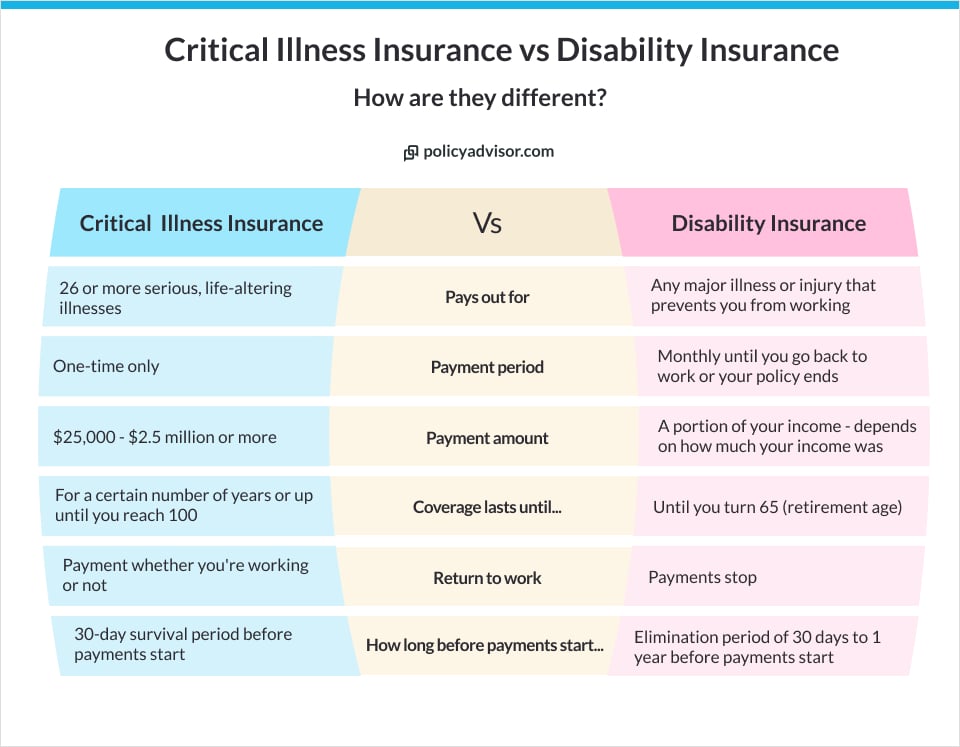
In Canada, it acts as a financial safety net, typically replacing 60% to 80% of your regular income so you can continue paying your mortgage, bills, and living expenses while you recover. Unlike critical illness insurance, it pays an ongoing monthly benefit rather than a single lump sum on diagnosis. 

Schedule a call for visitor insurance

Need insurance answers now?

Call 1-888-601-9980 to speak to our licensed advisors right away, or book some time with them below.

Do I need disability insurance in Canada?

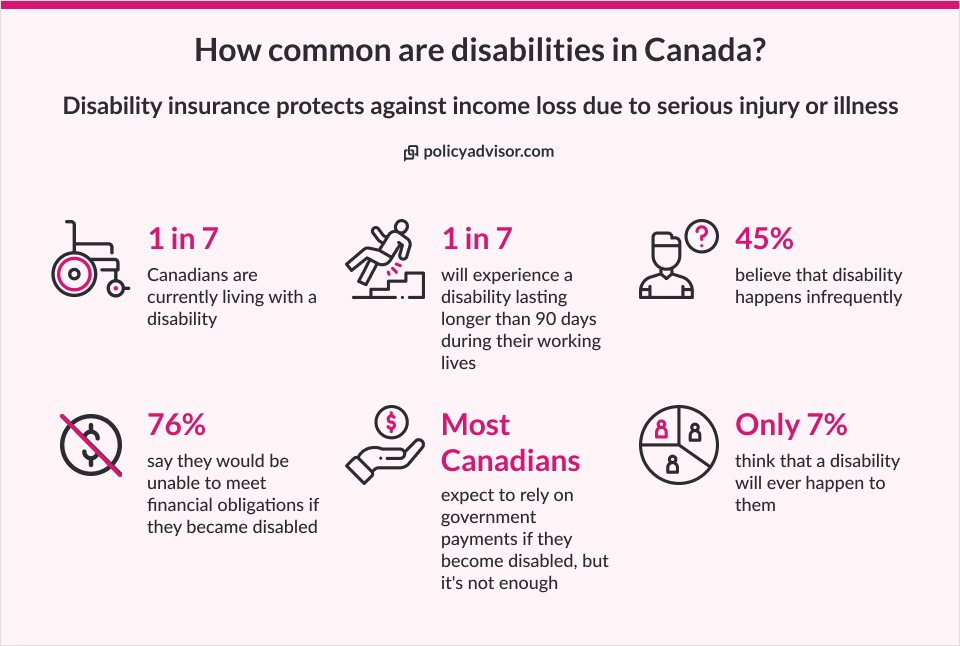
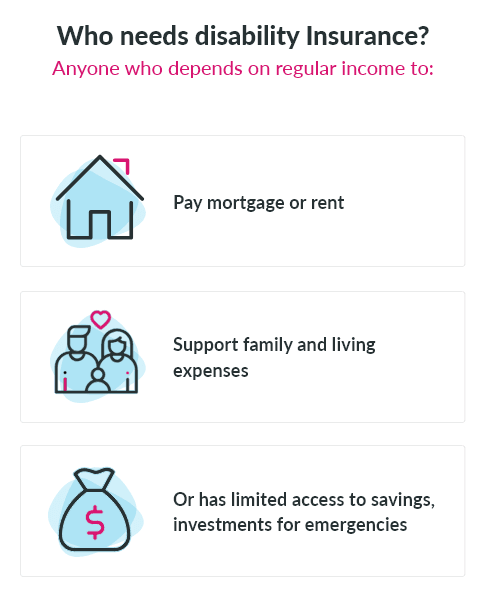
Statistically, 1 in 3 Canadians will experience a period of disability lasting longer than 90 days before they reach age 65. Your ability to earn an income is your most valuable asset. If you earn $80,000 a year and have 20 years left until retirement, your future earning potential is $1.6 million. You insure your $40,000 car and your $600,000 house without a second thought. Insuring yourself is important to maintain your current lifestyle for an extended period of time.
Who needs disability insurance

What conditions qualify for disability insurance in Canada?

Canadians are susceptible to injuries and conditions that prevent them from working. No wonder 12 million Canadians have disability insurance coverage. Common causes of claims include:

  • Mental Health Conditions: Major depression, severe anxiety, bipolar disorder, and post-traumatic stress disorder (PTSD).
  • Musculoskeletal Disorders: Chronic back pain, severe arthritis, and degenerative disc disease.
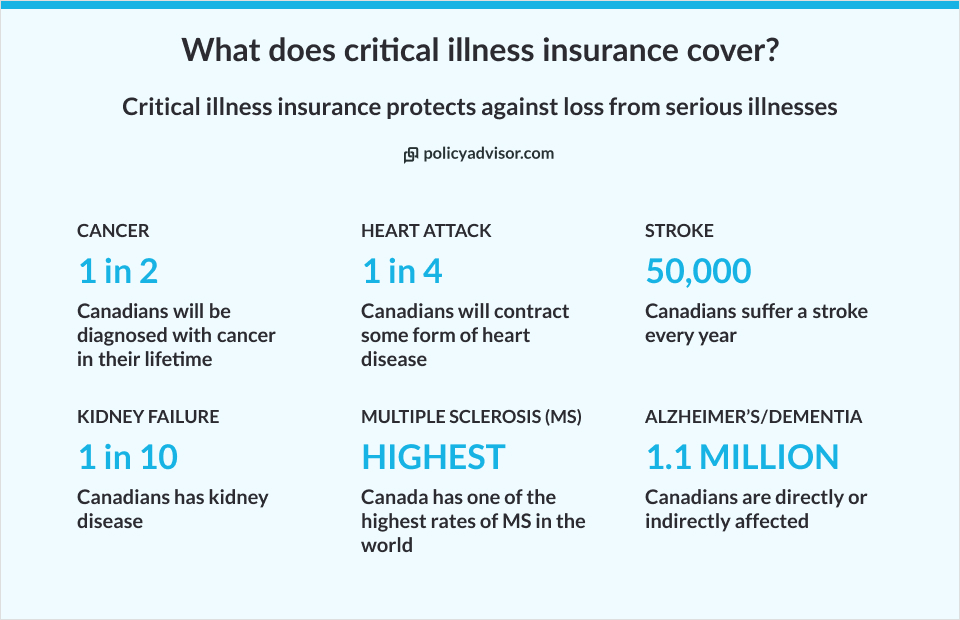
  • Neurological Disorders: Multiple sclerosis (MS), epilepsy, Parkinson’s disease, and stroke.
  • Systemic and Chronic Illnesses: Cancer, heart disease, diabetes complications, and autoimmune disorders like lupus.
  • Chronic Pain and Fatigue: Fibromyalgia and myalgic encephalomyelitis/chronic fatigue syndrome (ME/CFS).
  • Respiratory Disorders: Severe asthma and chronic obstructive pulmonary disease (COPD).

What are the different types of disability insurance?

In Canada, disability coverage is divided into two distinct categories:

1. Short-term disability insurance

Short-term disability insurance is usually offered to cover the loss of income from short-term or temporary health issues arising from a less-serious illness or accident.

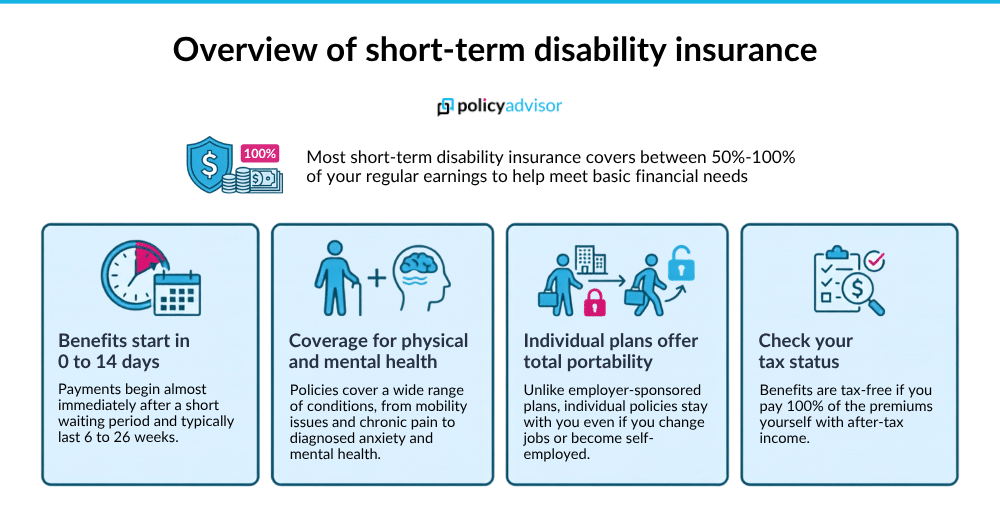
The benefit payments can begin as soon as you use up your sick leave, sometimes as early as 1-14 days after a claim is submitted, with coverage lasting typically between 6-26 weeks, although coverage can also go as long as 52 weeks. 

It’s commonly used for temporary health issues, like minor accidents, sports injuries and back problems that may prevent you from working for a few weeks or months. Short-term disability insurance are generally offered by your employer as they seek to attract and retain talent.

2. Long-term disability insurance

Long-term disability insurance is used to protect against loss of income from more persistent, ongoing health issues. 

Its coverage usually begins right after the short-term disability period is over and the coverage time can be for 2 or 5 years, although most long-term disability coverage lasts until the age of 65 (standard retirement age). 

It’s usually purchased by individuals to supplement their employer-provided disability insurance. It’s commonly used for mental health problems, musculoskeletal problems, accidents, and more.

How disability insurance works: Step by step guide

Here’s the simplest way to understand how disability insurance works: you buy coverage, pay premiums, and if in case you become disabled, you claim the benefits, and then eventually return to work or reach the end of your benefit period.

Step 1: You secure coverage through work or individually

Many Canadians usually get disability coverage through employer group benefit plans. These plans typically provide short‑term disability (STD), long‑term disability (LTD), or both, often with premiums partially or fully paid by the employer.

If you don’t have sufficient disability insurance through work or you’re self‑employed, you can buy individual disability insurance from a Canadian insurer. Individual policies let you customize coverage and keep it even if you change jobs or employers.

Step 2: You design your policy

When you apply for individual disability insurance, or when you enroll in certain group plans with optional choices, you’ll decide key policy features such as:

  • Monthly benefit amount: This is the maximum income the policy will pay you each month while you’re disabled.
  • Waiting period: This is the time you must be continuously disabled before benefits begin.
  • Benefit period: This is how long benefits can continue once approved; for example, 2 years, 5 years, or to age 65. 
  • Optional riders and features: Common riders include cost‑of‑living/inflation protection (COLA), residual or partial disability benefits, waiver of premium, etc.

Step 3: You pay premiums and keep coverage in force

Once you’re approved, the policy stays in force as long as you keep paying premiums. Many individual disability policies in Canada are either non‑cancellable (the insurer cannot change premiums or benefits before a stated age, often 65) or guaranteed renewable (the insurer must renew coverage as long as you pay premiums but can adjust rates by risk class in future).

Employer group plans typically continue while you’re an eligible employee and stop if you leave the employer or retire.

Step 4: If you become disabled and stop working

If an illness or injury prevents you from performing the duties of your job or, under some policies, any job suited to your education and experience, you may meet the eligibility criteria of disability insurance. The different definitions of disability significantly impact how and when benefits are paid out.

  • Own-Occupation: You will be eligible for benefits if a disability prevents or limits you from performing the duties of your pre-injury occupation. There are no restrictions: for instance, you can continue to receive benefit payments even if you’re able to work in another occupation.
  • Any-Occupation: Under this type of policy, you may be ineligible to receive benefits if you can work in any other job. You may not even be working, but if you are deemed to be able to work, you will not be eligible for benefits under a policy with this definition.

Step 5: You satisfy the waiting/elimination period

Most long‑term disability policies have an elimination period during which you must remain disabled before monthly benefits begin. Some plans coordinate this period with paid sick leave, employer STD benefits, or EI sickness benefits so that income continues during the wait time.

Step 6: You submit a disability insurance claim

To start a claim, you (or your employer for group plans) complete disability claim forms and submit medical and income documentation. Common documentation includes:

  • A claimant statement describing your job duties, symptoms, and how the condition prevents you from working.
  • An Attending Physician’s Statement (APS) or medical questionnaire completed by your treating physician or specialist, detailing diagnosis, treatment, restrictions, and expected duration.
  • Employment and income verification, such as pay statements, T4 slips, tax returns, or financial statements for self‑employed applicants.

Step 7: The insurer assesses your disability and eligibility

The insurer’s claim team reviews medical evidence, occupation details, and policy terms to decide whether you meet the definition of total or partial disability. They may request additional information, schedule independent medical examinations, or obtain further records before making a decision.

For many group LTD plans, the initial test focuses on whether you’re unable to perform the essential duties of your own occupation for the first 24 months of benefits, then shifts to whether you can perform any occupation for which you’re reasonably qualified afterward. Individual policies can use different definitions, including pure own‑occupation coverage that doesn’t change over time.

Step 8: Monthly disability benefits begin

Once your claim is approved and the elimination period is satisfied, your insurer starts paying monthly disability benefits based on your policy’s insured amount and any applicable offsets. Benefits typically replace a portion of your gross pre‑disability income. Benefits are usually paid monthly and may be taxable or tax‑free depending on how premiums were funded.

Step 9: Benefits continue while you meet the policy definition

Disability benefits can continue for months or years as long as you:

  • Continue to meet the policy’s definition of disability.
  • Provide reasonable ongoing medical updates when requested.
  • Participate in recommended rehabilitation programs when appropriate.

Many Canadian plans include rehabilitation or return‑to‑work support, such as funding for physiotherapy, psychological care, retraining, job search assistance, or workplace modifications. Some policies also include residual or partial disability benefits that allow reduced benefits when you can work part‑time or in a lower‑paying role. If you recover enough to return to work or no longer meet the disability definition, benefits stop.

Step 10: When disability insurance benefits end

Benefits usually end when:

  • You no longer satisfy the policy’s disability definition (for example, you can perform the duties of your own occupation or another gainful occupation as defined). 
  • You reach the end of the benefit period (e.g., 2 years, 5 years, or your policy’s termination age such as 65)
  • You fail to provide required medical evidence or do not comply with reasonable treatment or rehabilitation requirements, as defined in the policy.
  • You pass away; some policies include limited survivor benefits that pay a few months of benefits to a beneficiary.

How much does disability insurance pay in Canada?

Disability insurance typically replaces between 60% and 80% of your pre-tax earned income. You cannot insure 100% of your income. Furthermore, your coverage amount is based on your earned income (salary, wages, business income). It does not insure passive income (like rental properties or dividend investments) because you will continue to receive that income even if you are confined to a hospital bed.

For qualified professionals seeking coverage, the monthly benefit can range from $500 to as high as $25,000 a month depending on your specific occupation and current income levels, or even more for highly specialized cases.

I have employer-provided disability coverage, why do I need individual disability insurance?

Employer disability or for that matter most group-arranged disability policies have limitations, such as a limited coverage amount that is likely inadequate to cover your income replacement needs, nor do they have any flexibility to customize coverage.

Also, if you change employers or leave the group, you risk losing the coverage and most certainly the temporary benefit of lower pricing. Individual disability insurance plans, that you apply for directly, are something you can truly call your own. Ask the million of Canadians that have chosen to buy their own disability policies.

What can disability insurance payments be used for?

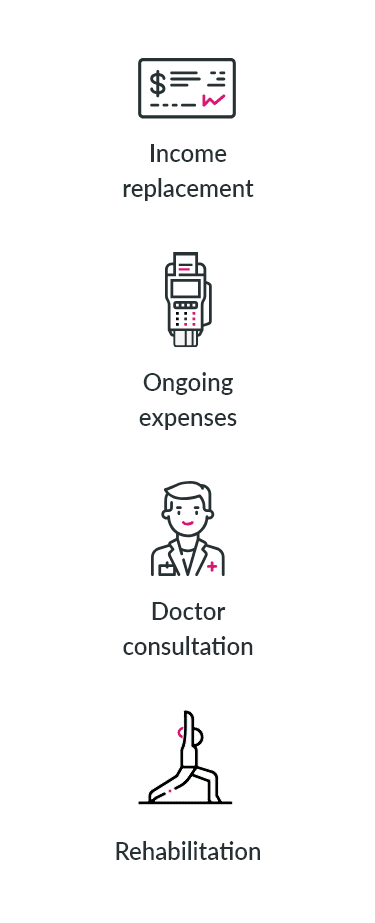
Whatever you choose! The monthly benefit you receive from an individual disability insurance policy can cover your everyday expenses as well help you pay any long-term debt repayments and medical bills. Additionally, many policies also provide non-monetary benefits such as rehabilitation, financial planning, job training, and more to help you regain your physical, emotional, and financial well-being.
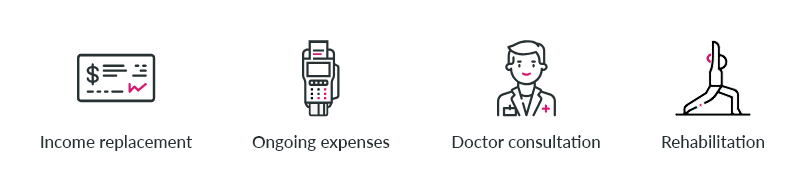
Disability benefit uses

How much does disability insurance cost in Canada?

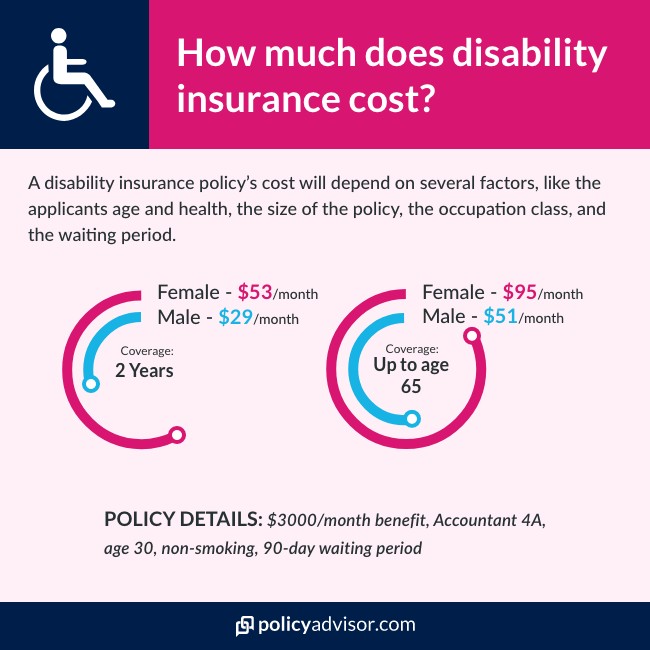
As a rule of thumb, disability insurance can cost between 1 – 3% of your annual income. The premiums can be paid monthly, quarterly or annually. However, insurance companies calculate your specific premium based on several risk factors.

What factors affect the cost of disability insurance?

The actual cost of disability insurance depends on a few factors like:

  • Age: The younger you are, the lower the risk of experiencing a disability and therefore the lower the cost of protecting you against it. Older applicants pay more.
  • Gender: In Canada, statistically, women file more disability claims than men at younger ages , meaning female rates are historically higher than male rates for the same occupation class.
  • Smoking Status: Smoking (or tobacco use) is the leading risk for disability and premature death in Canada. A tobacco-free lifestyle has huge health benefits and even bigger insurance premium benefits.
  • Health: Insurance companies look at your recent and past health history to establish whether they can offer disability insurance and the price at which they should offer.
  • Occupation: Premiums are usually based on the type of occupation a person has and the perceived level of risk. A high-income earning professional working from an office has a lower premium compared to a heavy machinery operator.
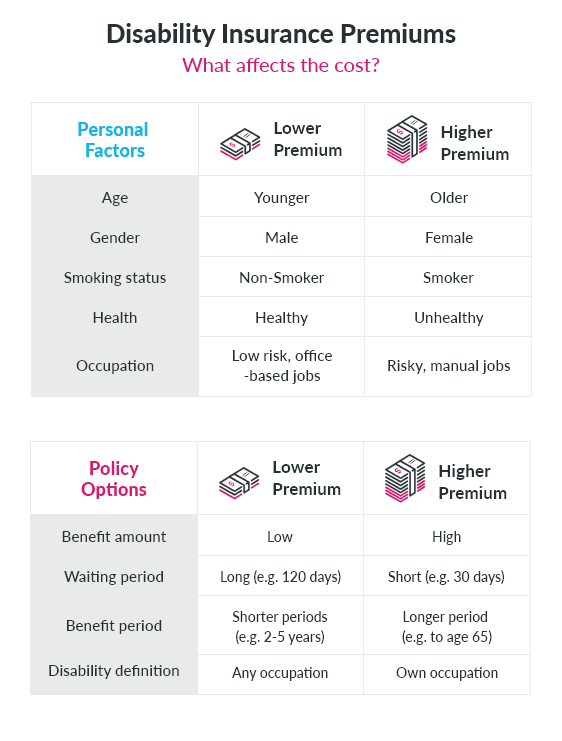
Disability insurance cost

Other policy factors that affect your disability insurance premiums

The cost of disability insurance also depends on certain variable factors you choose when you start the policy: the benefit amount, the waiting period, the benefit period, and the classes of disability.

  • Benefit Amount: It depends on your current income and occupation class but is generally offered between 60-80 percent of your monthly take-home pay, up to a pre-defined maximum.
  • Elimination Period: Most long-term disability policies will allow waiting periods of 30, 60, 90, 120, 180 and 365 days, although 120 days is the most commonly selected period. The longer your waiting period the lower you will pay in premium.
  • Benefit Period: Common term lengths are 2 years, 5 years, or until age 65. The longer your chosen benefit period, the higher your premium.
  • Disability Definition: This is the most important criteria for defining the cost of your disability insurance and can even determine whether or not you will be considered eligible to receive benefits.

How do I apply for individual disability insurance?

The application process for individual disability insurance is very similar to applying for life insurance. Insurance companies will pay particular attention to whether you have any preexisting conditions that could later prevent you from working.

There is also an extra step to verify your income level and work credentials since your coverage amount is generally established based on your current income. In some cases, companies may also benchmark coverage off the average income levels from previous years.

Will disability insurance cover me if I’m self-employed?

If you are amongst the rising number of entrepreneurial Canadians choosing to be their own boss, you should plan for a safety net for you and your family through disability insurance. Disability insurance plans are designed to cover self-employed individuals’ needs for protecting their income and some can also help cover business expenses. You’ll need to provide proof of income for a substantial period of time and the status may also affect the price of premiums.

Does disability insurance cover pre-existing conditions?

Pre-existing conditions don’t necessarily disqualify you from obtaining disability insurance. Insurance companies will typically carve out an exclusion for certain pre-existing conditions. These exclusions may be permanent, or in some cases may be removed if there is no recurrence or degeneration of the condition within a pre-designated period of time.

If you currently deal with a condition or disability but can still perform the duties of your occupation, it’s possible to obtain disability insurance for conditions or illnesses unrelated to your current disability. You can be covered for new, unrelated disabilities, but not further complications from the pre-existing ones you had.

Is pregnancy covered under individual disability insurance?

It’s complicated and really depends on your policy. While most policies won’t pay disability benefits for a normal pregnancy or childbirth, some will approve claims for disabilities arising from complications during pregnancy or childbirth. When in doubt, speak to our licensed advisors.

Thinking about disability insurance?
Use our one-of-a-kind disability insurance assessment tools and get instant disability insurance quotes.
GET STARTED

Do I need disability if I have critical illness insurance and life insurance?

Life insurance and critical illness insurance are important protection products, however, they serve very different needs. Life insurance covers your death; an insurance company will pay your designated beneficiary a lump-sum tax-free amount when you die.

Critical illness insurance covers if you develop a specified illness, have a health event or undergo treatment. You receive a tax-free lump-sum payment once proof of the illness or health incident is established.

Similar to critical illness insurance, disability insurance is a living benefit to you. However, the disability is specifically designed to replace your ongoing income when you are unable to work due to disabilities that may not qualify as life-threatening and therefore not trigger a payment under critical illness policies.

Wouldn’t public healthcare or Canada Pension Plan (CPP) cover me instead?

If you contribute to Employment Insurance (EI) and the Canada Pension Plan (CPP) or Quebec Pension Plan (QPP), you may qualify for EI Sickness Benefits and CPP Disability Benefits. However, eligibility rules are strict, and payouts are often far below your current earnings.

EI Sickness Benefits support Canadians who can’t work due to illness, injury, or quarantine. Benefits are payable for up to 26 weeks after a one-week waiting period, at 55% of your average insurable weekly earnings, up to a maximum of $729 per week. Benefits are taxable, and while some claimants may qualify for a family supplement based on net family income and dependants, the overall safety net is limited and typically insufficient to maintain your lifestyle.

CPP Disability Benefits are for contributors whose disability is both severe (prevents any substantial, gainful work) and prolonged (long-term or likely to result in death). The maximum monthly CPP Disability payment is $1,741.20, while the average for new beneficiaries is about $1,210–$1,235 per month. CPP benefits are taxable, and approval requires that you be unable to work at any job on a regular basis.

Private disability insurance is designed to cover the gap left by these public programs, providing higher, more reliable income replacement when you can’t work.

I have insurance through WSIB, why would I need private disability insurance?

The Workplace Safety and Insurance Board (WSIB) is an Ontario-specific workers’ compensation board. Each province, territory, and Canada itself (for Federal employees) has its own. These boards exist to protect employees from the financial hardships associated with work-related permanent injuries and conditions and are solely funded through employer premiums.

In cases where you have WSIB coverage through your employer, remember it may not be what you think it is. Disability insurance offered through WSIB is generally tailored specifically around covering accidents that happen on the job. If you are injured outside of the workplace, this insurance won’t cover you, and mostly involves lump sum tax-free payments for loss of appendages or senses like sight and hearing due to a workplace accident.

When should I buy disability insurance?

If you need disability insurance, then purchase it right now! The cost of disability insurance will never be lower for you than it is currently; the costs only increase with age. If you’re in relatively good health, you should easily qualify for a disability policy and can lock in lower rates at this age.

Alternatively, if your health declines or occupation changes, you may no longer be insurable at an affordable premium in the future that you could easily obtain today.

How do I buy disability insurance in Canada?

You can buy disability insurance in Canada directly through PolicyAdvisor by comparing quotes, customizing your coverage, and applying online. Simply calculate your income replacement needs, compare personalized quotes online from top insurers, and submit your digital application in minutes.

Our licensed advisors help you get the best rate, assist with medical underwriting requirements, and lock in your policy without any pushy sales tactics.

30 Insurance Providers. One Phone Call.
PolicyAdvisor can help you save time and money when comparing Canada's top insurance companies. Give us a call!
GET STARTED

Frequently Asked Questions

Are disability insurance payments taxable?

Disability income may or may not be subject to income tax, depending on whether the policy premium was funded with pre-tax or after-tax dollars, among other considerations. If you are paid out by a policy that was fully or partly paid by your employer or another association or entity, generally using pre-tax premium dollars, you will be taxed when you receive the payment.

However, if you are paying the full price for premiums throughout your coverage period, and do not claim them as tax-deductible business expenses, you will not be taxed on the benefit.

Can I get my premiums back if I don’t make a claim during the coverage period?

Some disability insurance policies offer a Return of Premium (ROP) rider. What this means is that after a set time period where you make zero claims, you are entitled to receive a percentage back of the premiums you paid.

What happens at the end of the coverage period?

Some disability insurance policies have options to convert them to long-term care coverage at the end of the coverage period. You would typically need to be between the ages of 55-65 when your coverage period ends to take advantage of this option.

What happens to my disability insurance payout if I die?

In most cases, your benefit ends with your death, the same as your wages would with a job. However, many disability policies will also include a survivor benefit whereby your family or any designated beneficiary may receive a lump sum payment of up to 3 times the maximum monthly benefit, should you pass away while receiving disability benefits.

Do I pay more if I purchase a disability policy through a broker?

Of course not! On the flip side, you may be able to save money on a disability policy if you use an independent broker. At PolicyAdvisor, we compare multiple insurers, evaluate them across features and prices and recommend to you the best disability coverage at the lowest price possible.
Need help?
Call us at 1-888-601-9980 or book time with our licensed experts.
SCHEDULE A CALL
/* Custom Archives Functions Go Below this line */ /* Custom Archives Functions Go Above this line */

A guide to short-term disability insurance in Canada

Disability insurance can protect you and your family from major loss of income if you are injured or become ill and can no longer work. Coverage is categorized based on the length of the benefit period, called short-term disability insurance (STD) and long-term disability insurance (LTD). STD provides temporary income replacement while you recover, while LTD typically takes over when your STD benefits or elimination period ends, providing income support for a longer-term disability.

Schedule a call for visitor insurance

Need insurance answers now?

Call 1-888-601-9980 to speak to our licensed advisors right away, or book some time with them below.

What is short-term disability insurance?

Short-term disability insurance provides income replacement if you are unable to work for a short period of time. The benefit payments can begin as soon as the waiting period is over (0-14 days), with coverage lasting typically between 6-26 weeks, although coverage can also go as long as 52 weeks. 

It is commonly used for temporary health issues, like minor accidents, sports injuries and back problems that may prevent you from working for a few weeks or months. The benefit payments from STD insurance can cover most of your lost income, so while you recover, you don’t have to worry about meeting your basic financial needs.

short-term disability insurance

How does short term disability insurance work?

Short-term disability insurance acts as income replacement for the time after you use your sick days and before any long-term disability insurance kicks in (if you have that in place). 

  • Apply for STD insurance benefits: Once your sick days are exhausted or if you do not have paid sick leave, you can file a claim under your short-term disability plan to replace part of your lost income
  • Provide medical documentation: The insurer will require medical records, reports, or other information from your healthcare provider to confirm your condition and inability to work
  • Complete the waiting period: Your policy may have a waiting or elimination period before benefits begin. Depending on the plan, this can vary from a few days to several weeks.
  • Receive income replacement: Once your claim is approved and the applicable waiting period of 0-14 days has been met, you can receive a portion of your regular income. Short term disability coverage lasts 6 to 26 weeks, although some plans may provide benefits for up to 52 weeks

If you remain unable to work after your short-term disability benefits end, you may transition to long-term disability insurance benefits, provided you meet its eligibility requirements.

What does short-term disability usually cover?

Short term disability insurance can cover a range of illnesses, injuries, and medical conditions that temporarily prevent you from working. Common conditions that may be covered under short-term disability benefits include:

  • Cognitive issues: Conditions that affect brain function, such as memory problems, difficulty concentrating, impaired decision-making, confusion, or delirium, may make it difficult to perform regular work activities
  • Breathing difficulties: Respiratory conditions such as asthma, pneumonia, influenza, tuberculosis, or other lung diseases can make it difficult to work, particularly when symptoms significantly affect breathing or physical activity
  • Chronic pain: Persistent pain caused by conditions such as back problems, arthritis, or cancer may qualify when the symptoms are severe enough to prevent an employee from performing their regular duties or daily activities
  • Hearing issues: Hearing impairment caused by factors such as illness, injury, prolonged exposure to loud noise, or other medical conditions may affect a person’s ability to perform their job, particularly in workplaces where communication or hearing is essential
  • Digestive issues: Conditions affecting the digestive system, such as irritable bowel syndrome (IBS), gastroesophageal reflux disease (GERD), or certain cancers, may qualify when symptoms prevent an employee from working
  • Restricted mobility: Conditions that limit movement or the use of the upper or lower body may qualify for STD insurance benefits. For example, an injury or illness that requires the use of a wheelchair, cane, or walker may temporarily prevent someone from performing their regular job duties

What does short-disability insurance not cover?

Short-term disability insurance doesn’t cover work-related or on-the-job injuries. There are a few other exclusions as well, such as:

  • Pre-existing conditions
  • Self-inflicted injuries
  • Work-related injuries
  • Elective or cosmetic procedures
  • Cosmetic procedures
  • Disabilities outside the policy definition

How can short-term disability insurance help in real-life situations?

One of our advisors recently helped a client who worked as a construction worker. After reviewing his income, occupation, and existing workplace benefits, the advisor helped him choose short-term disability coverage to protect his earnings if an injury temporarily prevented him from working.

Later, the client was injured in a car accident and required hospitalization followed by several months of recovery at home. Because he was unable to perform physically demanding duties or return to the construction site, he could not earn his usual income. After satisfying the policy’s waiting period (0-30 days), his short-term disability benefits provided a portion of his lost income, helping him cover everyday expenses while he recovered and prepared to return to work.

Types of short-term disability insurance

Short-term disability benefits in Canada can come from government programs, an employer-sponsored group plan, or an individual policy purchased from a private insurer. Each option works differently and offers different levels of income protection.

  • Government programs: The federal government offers disability-related income support through programs such as Employment Insurance (EI) Sickness Benefits and Canada Pension Plan (CPP) Disability Benefits. EI Sickness Benefits provide short-term income support, up to a maximum of $729 per week for up to 26 weeks. CPP Disability Benefits are available to eligible CPP contributors aged 18 to 65 with a severe and prolonged disability that regularly prevents them from working, offering a maximum monthly benefit of $1,741.20
  • Employer-sponsored plans: Many employers offer short-term disability coverage as part of a group benefits plan. Depending on the plan, benefits may replace 50%-100% of your regular income while you are unable to work. Your employer may pay all or part of the premium, making this coverage relatively affordable for employees. However, the amount and duration of coverage depend on your employer’s plan
  • Individual short-term disability insurance: You can also purchase disability coverage directly from a private insurer. An individual policy can provide coverage that is separate from your employer, giving you greater control over the amount of income you want to protect, the waiting period, and the benefit period. Because the policy is owned by you, coverage generally remains in place even if you change jobs, as long as you continue paying the premiums

How is an individual policy different from a work short-term disability plan?

The main difference between an individual short-term disability (STD) policy and an employer-sponsored plan is who owns and pays for the coverage. Here’s how they compare:

  • Who pays the premiums: With an individual policy, you purchase coverage directly from a private insurer and pay the premiums yourself. With an employer-sponsored plan, your employer may pay all or part of the premium, or the cost may be shared among employees through payroll deductions. Some workplace or union plans may also allow you to pay an additional premium to upgrade your coverage
  • Cost: Employer-sponsored STD coverage is often less expensive for employees because the premiums may be subsidized by the employer or negotiated as part of a group benefits plan. Individual coverage is generally more expensive because you are responsible for the full premium
  • Coverage and flexibility: An employer’s short-term disability plan generally has predetermined benefit amounts, waiting periods, and coverage terms that apply to eligible employees. An individual policy, on the other hand, gives you greater flexibility to choose the amount of income you want to protect and adjust features such as the waiting period, definition of disability, and benefit period to suit your needs
  • Portability: Individual short-term disability coverage is generally portable, meaning it stays with you if you change jobs, become self-employed, or leave the workforce, as long as you continue paying your premiums. Employer-sponsored coverage is tied to your employment and may end when you leave the company
Still looking for disability insurance rates?
PolicyAdvisor saves you time and money when comparing Canada’s top insurance companies. Check it out!
GET STARTED

Benefits of short-term disability insurance

Listed below are some of the reasons why STD Insurance is important:

  • Replaces a portion of lost income: Short term disability benefits can replace 50-100% of your regular income when an illness or injury prevents you from working. Having income protection can reduce the financial stress associated with an unexpected illness and allow you to focus on recovering rather than returning to work too soon
  • Bridges the gap before LTD coverage: STD insurance coverage can provide income support during the initial weeks or months of a disability before long-term disability (LTD) benefits become available, if LTD coverage is included in the plan
  • Supports employee retention: For employers, offering short term disability coverage can make a benefits package more competitive and help attract and retain employees. Employees often place greater value on workplaces that protect against unexpected financial hardship
  • Encourages employees to take necessary time off: Income protection can give employees greater flexibility to take time away from work when they are genuinely ill or injured, rather than feeling pressured to work through a health issue
  • Flexible spending: Payouts go directly to you with no restrictions, meaning you can use the funds for rent, groceries, utilities, or medical bills

How long do short-term disability benefits last?

Short-term disability benefits most commonly last 6 to 26 weeks, although the exact duration varies by plan. Benefits may be approved in shorter increments and require updated medical documentation to continue. If you remain unable to work after STD benefits end, you may transition to LTD benefits if you have eligible coverage. 

Do anxiety or mental health issues qualify for short-term disability?

Yes, anxiety and mental health issues usually qualify for short-term disability. This applies when a medical practitioner confirms that your symptoms prevent you from performing your usual job duties. For example, if a panic attack hospitalizes you and you are unable to work, it may better justify a short-term policy’s payout. As mental health issues become more widely diagnosed and recognized at the same level as physical illness or injury, more insurers are including them in their short-term disability plans.

However, not every policy guarantees mental health coverage. Some might only cover physical injuries or require additional premiums to be included in the scope for mental health coverage, or may exclude specific mental illnesses depending on the individual’s mental health history. Also, whether mental health issues qualify may depend on the severity. For example, a stress leave may create a grey area to qualify for short-term disability insurance.

Are short-term disability benefits taxable in Canada?

Short-term disability benefits may be taxable depending on who pays the premiums. If your employer pays all or part of the premiums, the benefits are taxable. If you pay 100% of the premiums yourself with after-tax income, the benefits are tax-free. If benefits are taxable, you may have to pay income tax on the amount you receive. The tax treatment thus can vary based on how your plan is structured and who actually pays the premium.

Is short term disability insurance worth it?

Whether you should purchase short-term disability insurance depends on you and your family’s needs. First, figure out how much income you will need to replace if you face an unfortunate circumstance that leaves you unable to work. Could employment insurance payouts cover this amount? Or do you need additional coverage?

Further, your employer may sponsor short-term disability coverage. This might be an affordable option for you to cover some of your income, but it might not provide enough to fit your family’s needs. This might mean purchasing additional policies or upgrading your work plan. 

It is beneficial to work with an insurance advisor to determine what your short-term disability needs are and how much a short term disability insurance policy costs. One of our advisors at PolicyAdvisor can review your employer-provided plan and make sure you have a short-term disability policy that matches your needs. Schedule a call with one of our experts today and ensure your family is protected if you ever face an illness, accident, or injury.

Need help?
Call us at 1-888-601-9980 or book time with our licensed experts.
SCHEDULE A CALL

Frequently asked questions

Can I get individual short-term disability insurance if I am self-employed?

Yes, self-employed individuals can purchase individual short-term disability insurance from a private insurer since they do not have access to employer-sponsored coverage. An individual policy provides portable income protection and allows you to choose coverage based on your income and financial needs.

Can I have short-term and long-term disability insurance at the same time?

Yes, you can have both short-term and long-term disability insurance at the same time. STD provides income replacement during the initial weeks or months of a disability, while LTD can take over after the STD benefit period or LTD waiting period ends if you remain unable to work and meet the policy’s eligibility requirements.

Can I get short term disability insurance without an employer?

Yes, you can purchase an individual short-term disability insurance policy directly from a private insurer without relying on employer-sponsored coverage. This can be particularly useful for those whose workplace does not offer short term disability benefits.

What happens when short-term disability benefits end?

If you remain unable to work after your short-term disability coverage ends, you may transition to long-term disability (LTD) benefits, provided you have LTD coverage and continue to meet its eligibility requirements.

How long is the waiting period for short-term disability insurance?

The waiting period for short term disability insurance is usually 0-14 days, depending on the policy. It refers to the period you must wait before STD benefit payments begin after becoming disabled. During this time, you may need to rely on sick leave, savings, or other sources of income to cover your expenses.

/* Custom Archives Functions Go Below this line */ /* Custom Archives Functions Go Above this line */

Do I need disability insurance if covered at work in Canada?

Many Canadians assume employer disability insurance will replace their income if they are unable to work for several months or years due to an illness or injury. However, workplace disability insurance usually replaces only part of your income and may also be affected by additional factors, such as monthly benefit limits, taxes, offsets, exclusions, and the policy’s definition of disability.

Schedule a call for visitor insurance

Need insurance answers now?

Call 1-888-601-9980 to speak to our licensed advisors right away, or book some time with them below.

Do I need disability insurance if I already have coverage through work?

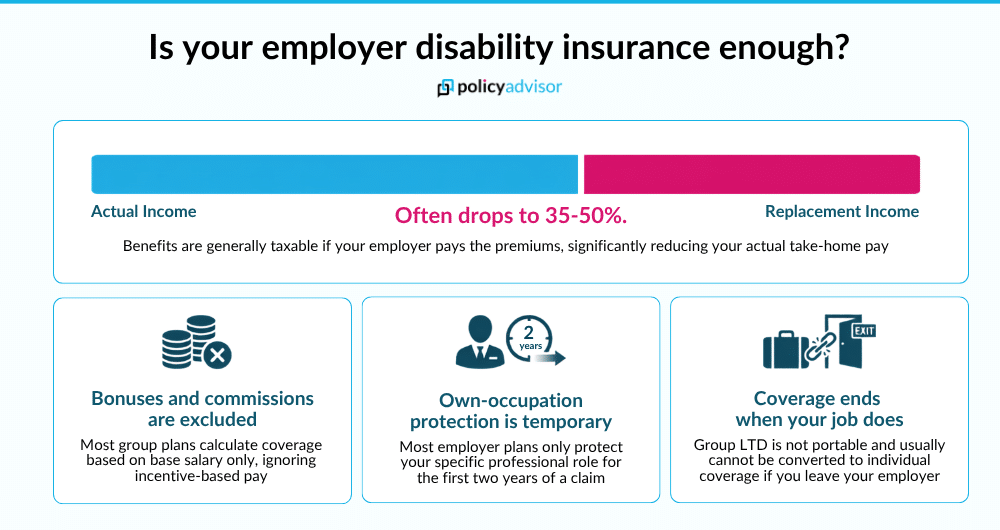
Yes, you may need disability insurance even if you have coverage through work. Group disability plans often cover only part of the base salary and may exclude bonuses or other commissions. Additionally, it can be taxable if the employer pays for it. As a result, the real income replacement could come down to as low as 35% to 50% of your usual earnings.

Employer disability coverage is a valuable starting point, but it may not provide enough coverage, especially for higher-income earners and commissioned professionals. If your employer offers disability insurance, it is important to review whether it is enough to protect your lifestyle if you are unable to work for an extended period.

What is the difference between individual and group disability insurance in Canada?

Individual disability insurance is a policy you buy and own yourself. It is underwritten based on your health, income, and occupation, and it lets you customize how much income you want to protect, how long the benefit lasts, and how quickly payments start. Since you pay the premiums personally, benefits are usually tax-free. The coverage follows you throughout your career, even if you change employers or become self-employed.

Group disability insurance is provided through your employer or association. Enrollment is usually automatic and requires little to no medical underwriting, which makes it easier to qualify. However, the plan design is fixed: benefit amounts, maximums, waiting periods, and definitions are predetermined. Benefits are typically taxable when the employer pays the premiums, and coverage ends when your employment ends unless the plan offers a rare conversion option.

Here’s an overview of Individual and group disability insurance in Canada:

Feature Individual disability Group disability
How it is obtained Purchased personally through an advisor or insurer Provided by an employer or association as an off-the-shelf benefit; sometimes mandatory
Ownership and portability You own the contract, and it usually stays with you if you change jobs or become unemployed Employer or association owns the master policy; coverage typically ends when you leave the group
Underwriting Full medical and financial underwriting; can be declined or rated, but generally remains in force once issued Minimal or no medical evidence up to a non-evidence limit; medical evidence only for higher amounts
Premium cost Higher per dollar of benefit because it is tailored and individually underwritten Lower cost per dollar because risk is pooled and design is standardized
Who pays premiums You personally; benefits are generally tax-free if premiums are paid with after-tax dollars Employer, employee, or both; if employer pays, benefits are usually taxable
Benefit level Customizable amount and period, with higher maximums (for example, up to $10,000 per month) A fixed percentage of salary (for example, 60 to 70 percent) up to a plan maximum
Definition of disability May offer stronger regular-occupation or own-occupation definitions along with partial or residual disability features Often shifts to “any occupation” after a set period (for example, 2 years) and may pay only total disability
Tax treatment of benefits Usually non-taxable when you pay with after-tax dollars Taxable if employer pays; can be non-taxable if employee pays with after-tax dollars
Contract guarantees Terms and premiums can be guaranteed (for example, non-cancellable or guaranteed renewable) Employer or insurer can change or cancel plan; terms are not individually guaranteed
Riders and customization Many optional riders (COLA, own-occupation extensions, partial disability, future insurability, etc.) Limited or no individual riders; features are built into the group plan
Coordination with other income Designed to stack up to a maximum income-replacement limit; less offsetting Often offsets CPP-D, WSIB, EI, and individual DI so the benefit may be reduced
Stability if employer changes Unaffected by job changes, layoffs, or plan redesigns Coverage and terms may change if the employer changes insurers or benefit plans; coverage usually ends when you leave the employer
Ideal for High-income earners, self-employed individuals, business owners, professionals seeking strong guarantees Employees wanting basic, lower-cost income protection included within a benefits package

How does employer disability insurance work in Canada?

Group disability insurance is an employer-sponsored benefit that provides income replacement if you become unable to work because of illness or injury. Coverage is tied to your employment. When you leave the company, your protection usually ends.

Group disability insurance usually covers:

  • Short-term disability (STD) insurance in Canada replaces income for the first weeks or months of disability
  • Long-term disability (LTD) insurance in Canada begins after a waiting period and can last for years

Short-term policies typically pay benefits for 15 to 26 weeks, while long-term disability insurance can continue paying income replacement until age 65 if the disability persists.

More choice. Lower price.

PolicyAdvisor saves you time and money when comparing Canada’s top disability insurance companies. Check it out!

Types of disability coverage available to employees in Canada

Canadian employees may have access to two primary types of disability coverage: employer-provided benefits and government programs like Employment Insurance sickness benefits and workers’ compensation. 

Employer-provided benefits

  • Benefits are usually taxable when the premiums are paid by your employer. As a result, the benefit amount may be limited to as low as 35% to 50% of usual salary
  • Employers choose the plans and benefits, leaving employees without any control over customization or addition of policy features like riders
  •  Benefits are tied to your employment, leaving employees vulnerable if they incur a disability after changing employers or between jobs

Government programs

  • EI sickness provides short-term income support for up to 26 weeks for qualifying medical conditions
  • CPP/QPP disability offers benefits only for disabilities that are both severe and prolonged
  • Workers’ compensation benefits, such as WSIB in Ontario, provide support exclusively for injuries or illnesses that occur at work
  • Provincial disability programs offer basic income assistance for individuals with long-term severe disabilities
  • These programs provide helpful support, but they do not replace full earnings for most Canadians

Is employer disability insurance enough coverage?

No, employer disability insurance is usually not enough to cover your expenses, especially if you are a high-income earner or have variable income from bonuses and commissions. 

Understanding the following limitations helps you see where additional individual protection may be necessary:

Income-based gaps

  • Group LTD calculates coverage on base salary only
  • Bonuses, commissions, and incentive pay are not included under most plans
  • Monthly maximums can significantly reduce benefits for higher-income earners

Tax-related gaps

  • If your employer pays all or part of the LTD premium, the benefits are generally taxable 
  • After tax, your actual replacement income often drops to only 35 to 50 percent of your usual take-home pay

Contract and definition gaps

  • Most group LTD plans provide own-occupation protection for only the first two years of a claim
  • Some plans place duration limits on mental health-related disabilities
  • Pre-existing condition clauses may restrict coverage for new employees during the initial period
  • Benefits are reduced if you qualify for CPP-D, WSIB, or other government programs

Employment-related gaps

  • Group LTD coverage ends immediately when you leave your job
  • Many employer plans cannot be converted into individual coverage when employment ends
  • If your health declines later in life, you may no longer qualify for private disability insurance at standard rates
Disability insurance Canada employees
Compare the best disability insurance plans from Canada’s leading providers

How individual disability insurance helps Canadians

Individual disability insurance offers stronger, more reliable protection because it is tailored to your income, occupation, and long-term financial requirements. With individual disability insurance, you can:

  • Choose the benefit amount or income percentage that reflects your real earnings
  • Select a waiting period such as 30, 60, 90, or 120 days based on your savings and risk tolerance
  • Choose a benefit period of 2 years, 5 years, or to age 65 for long-term protection
  • True own-occupation coverage is available as a rider on some individual DI policies, but not all policies include it by default
  • Add partial or residual disability benefits to protect against reduced income
  • Include future insurability options to increase coverage as your income grows
  • Add a cost of living adjustment (COLA) to keep benefits aligned with inflation

Access specialized riders designed for professionals and business owners

Additionally, when you pay the premiums personally, disability benefits are generally tax-free, which provides a higher true income replacement even at the same coverage percentage.

Need help?
Call us at 1-888-601-9980 or book time with our licensed experts.
SCHEDULE A CALL

Our advisor’s take: Should I supplement a group disability plan with individual disability insurance?

Yes, you should consider supplementing a group disability plan with individual disability insurance. At PolicyAdvisor, we recently helped a 30-year-old employee purchase an individual disability insurance policy to bridge the gap between their salary and group disability benefits. They were seeking to maintain sufficient income during disability alongside the freedom to change employment without fear of coverage.

Client profile

  • Employment: Full-time professional with employer-provided disability insurance
  • Income: Higher earnings, including bonuses or commissions
  • Primary concern: Maintaining sufficient income during a long-term disability
  • Existing coverage: Group long-term disability benefits
  • Additional priority: Portable coverage that is not dependent on the employer

Why we recommend supplementing group disability coverage:

  • Individual insurance can supplement group benefits that cover only part of your earnings or impose a monthly benefit maximum
  • Bonuses, commissions, and other earnings may not be fully included when workplace disability benefits are calculated
  • Individual policy offers stronger disability definitions and benefits suited to professional commitments
  • Portable policy offers the individual the freedom to pursue other employment without worrying about coverage expiry.

How much additional disability insurance do I need if I have coverage through work?

The amount of additional disability insurance you need depends on the gap between the income available under your workplace plan and the amount you would need to cover your financial obligations and maintain your standard of living during a period of disability.

It is recommended to check your existing LTD workplace benefits and monthly maximums, and then compare them with your essential monthly expenses. It is also worth noting that workplace benefits may be taxable, further reducing the actual amount you get in hand. 

Once you have made that comparison, you can purchase additional coverage to match your monthly expenses as needed. However, insurers generally limit total disability income from multiple sources to the usual range of 60% to 85% of regular pay.

For example, an employee may earn $120,000 annually but have workplace LTD capped at $5,000 per month, which is less than the usual 60% to 85%. An individual disability insurance policy may be used to cover the deficit up to the required amount. 

If you are still unsure how much additional disability insurance you need, our advisors can help you understand policy limits, benefits, and other features.

How to check your group disability coverage at work?

You can check your group disability coverage at work by contacting your human resources (HR) representative or plan administrator to request your specific policy booklet and group contract details.

Here are a few things you can check to assess the strength of your current plan:

  • Confirm whether your workplace plan includes short-term disability, long-term disability, or both
  • Check the percentage of income the plan replaces and determine whether bonuses, commissions, or variable pay are excluded
  • Review the monthly maximum benefit to see whether it limits your eligible coverage, especially if you have higher earnings
  • Examine the definition of disability and identify when it transitions from own occupation to any occupation
  • Verify whether LTD benefits would be taxable based on how premiums are paid
  • Look at the waiting period and the length of the benefit period to understand how long support would continue
  • Review the offsets that apply if you receive EI sickness, CPP-D, WSIB, or similar government benefits
  • Check for mental health limitations, duration caps, or pre-existing condition restrictions that could affect eligibility

How PolicyAdvisor can help you understand your disability coverage

Most Canadians do not know how much income they would receive if they were unable to work for a year or longer. At PolicyAdvisor, we can analyze your workplace plan, calculate your true after-tax replacement income, and identify any gaps that could affect your financial security. Our advisors compare individual disability policies across major Canadian insurers and help you build a coordinated strategy that protects your long-term earning potential.

Schedule a call today, and get quotes from the best disability insurance providers in Canada!

Find and compare Canada’s top disability insurance rates in minutes

Frequently Asked Questions

How much disability insurance do I need if I am covered through work in Canada?

Most Canadians need 60% to 85% of their total income to maintain their lifestyle during a disability. Employer plans usually insure only base salary, and the benefits are taxable, which reduces the actual replacement amount. Adding an individual policy can help you reach the level of protection you actually need.

What is the difference between short-term and long-term disability through work?

Short-term disability replaces income during the first weeks of an illness or injury. Long-term disability begins after the waiting period and can continue paying benefits for several years or until age 65, depending on the plan.

Does CPP disability mean I do not need private disability insurance?

No, CPP-D has very strict medical and contribution requirements, and the monthly benefit is modest. It is not designed to replace employment income and is often deducted from group LTD payments.

Is disability insurance taxable in Canada?

Disability benefits are taxable when the employer pays the premiums for the plan. When you personally pay the premiums for an individual disability policy, the benefits are generally tax-free.

Can my employer change or cancel my disability coverage?

Yes. Employers can change insurance carriers, reduce the scope of benefits, or cancel coverage entirely. Individual disability insurance remains stable because the contract is owned by you, not your employer.

What happens to my disability insurance if I change jobs?

Employer disability insurance is tied to your workplace benefit plan and generally ends when your coverage under that plan terminates. On the other hand, individual disability insurance policies continue as long as premiums are paid, regardless of employment status.

/* Custom Archives Functions Go Below this line */ /* Custom Archives Functions Go Above this line */

Long-term disability insurance in Canada: A complete guide

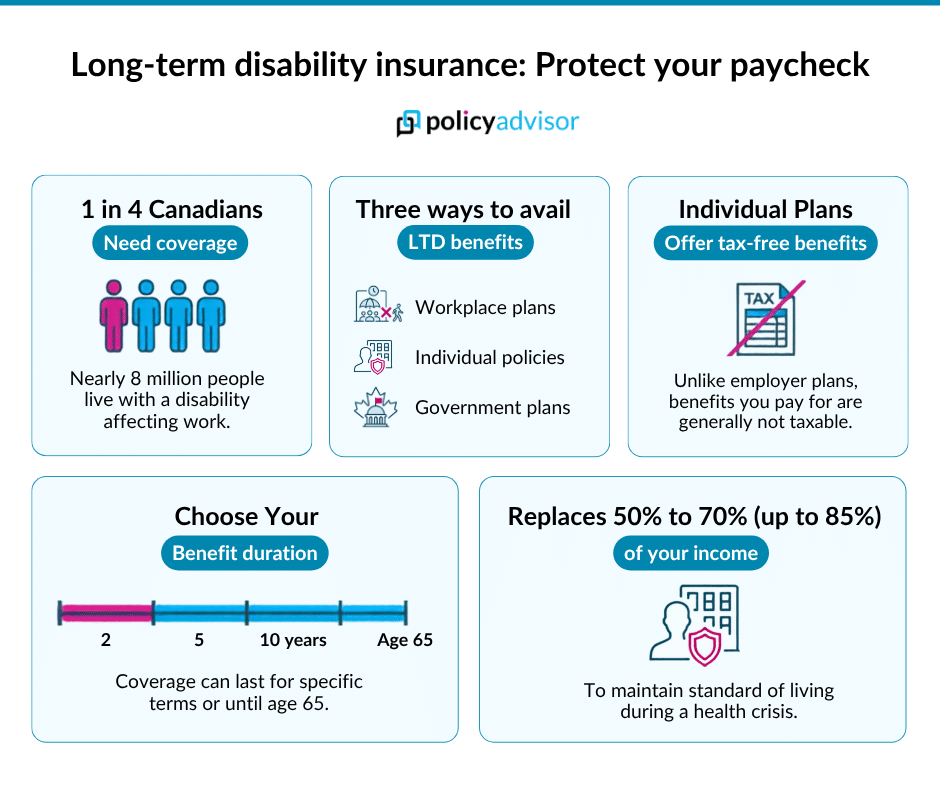
Long-term disability (LTD) insurance provides income protection if an illness or injury prevents you from working for an extended period. This coverage can be important for Canadians because nearly 8 million people aged 15 and older, 27% of the population, were living with a disability, according to the latest comprehensive Statistics Canada data. Long-term disability benefits typically replace part of your income after an elimination period and can continue for several years or until age 65.

Looking for the most affordable plan?

Enjoy the best rates on your disability insurance purchase today!

What is long-term disability insurance?

Long-term disability insurance provides income protection if you become unable to work due to a serious illness or injury. It typically replaces 50% to 70% (sometimes up to 85%) of your income and kicks in after short-term disability benefits end. 

Coverage can last 2, 5, or 10 years, or even until age 65, depending on the policy. Common conditions that qualify for benefits include cancer, mental health disorders, and musculoskeletal injuries, helping individuals manage financial needs while recovering.

While employer-provided disability plans and government programs like EI, CPP, and WSIB offer some coverage, they often have limitations on benefit amounts, eligibility, and coverage duration.  An individual policy can help fill gaps in employer-sponsored coverage. Private long-term disability insurance allows you to customize coverage, choosing benefit amounts, coverage length, and waiting periods. However, the benefits are often coordinated with other income (CPP‑D, WSIB, EI, employer DI), and tax treatment depends on who pays the premium.

long-term disability insurance

What are the types of long-term disability insurance?

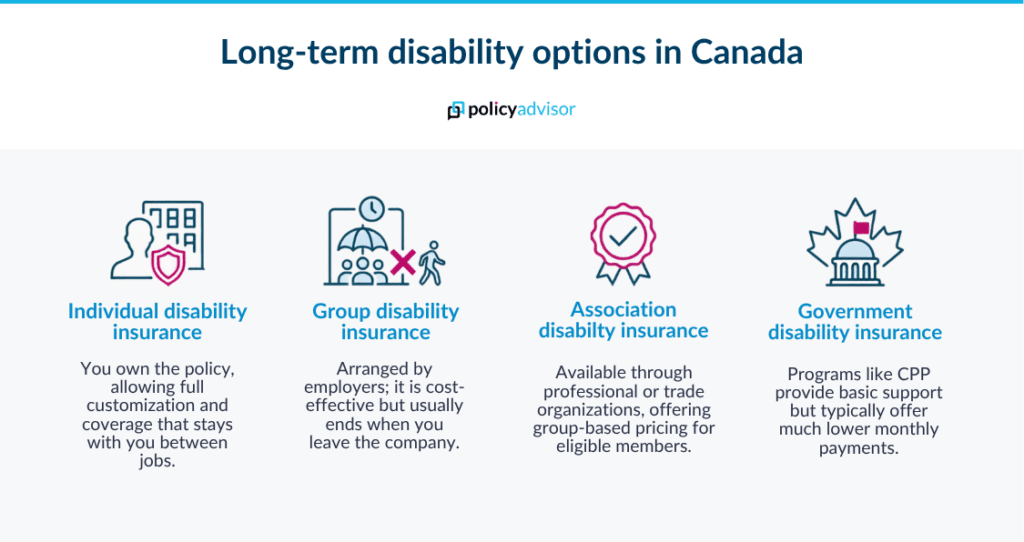
There are three types of long-term disability insurance. It is available through workplace plans, government plans, and as individual policies. The main differences are who qualifies, how much control you have, and whether the coverage stays with you if you change jobs.

  • Group long-term disability insurance: This coverage is provided through an employer or a professional association. It provides coverage for a portion of your salary if you become disabled. The plan offers pre-set benefits and policy terms, which may include limitations on benefit amounts, waiting periods, and coverage duration. Association plans can be particularly relevant for professionals who do not have employer-sponsored coverage
  • Individual long-term disability insurance: Individual or private LTD insurance is purchased privately from an insurer. This provides greater control over the benefit amount, waiting period, benefit period, and definition of disability. It can supplement existing group coverage and help fill gaps in workplace or association plans
  • Government disability benefits: Government programs can provide financial support to Canadians who cannot work because of a disability. Depending on the situation, this may include EI sickness benefits, CPP disability benefits, or workers’ compensation benefits such as WSIB

Differences between group and individual long term disability plans

Group and individual long-term disability (LTD) insurance differ in cost, underwriting, taxation, coverage flexibility, control over the policy, and portability. In the table below, we have listed the differences between group and individual long-term disability plans. 

Group vs individual long-term disability plans:

Features Group long-term disability plans Individual long-term disability plans
Eligibility & underwriting Generally easier to qualify for, with limited or no individual medical underwriting for basic coverage Usually requires individual underwriting, including health questions and potentially a medical exam
Who pays the premiums? Your employer may pay all or part of the premiums You pay the premiums yourself, typically with after-tax income
Taxability If your employer pays the premiums, the benefits are generally taxable Benefits are tax-free
Cost Typically less expensive because the risk is spread across a group of employees Usually more expensive because the policy is individually underwritten and offers greater customization
Coverage flexibility Coverage amounts, waiting periods, benefit periods, and other features are determined by the group plan You can customize key features, including the benefit amount, waiting period, benefit period, and definition of disability
Portability Coverage may end when you leave your employer, although conversion options may be available Coverage generally stays with you regardless of changes in employment
Control over the policy Your employer or plan sponsor selects the policy terms You choose the insurer and policy features based on your needs

How long can you get long-term disability benefits from work?

Long-term disability insurance administered through your employer functions similarly to individual long-term disability insurance. A plan might provide two to five years of payouts or provide the benefit until your retirement age. However, you might not have the option to choose the benefit period for an employer-sponsored plan. An employer is typically selecting the benefit period instead. If the selected period doesn’t work for your circumstances, it might be beneficial to look into private insurance.

Employers may also give employees the option to upgrade their work policy. But doing so can come at an additional cost. For example, suppose your employer-sponsored long-term disability plan pays 50% of your income for five years after a 120-day waiting period. The plan might have an upgrade option, where, in exchange for a $50 bi-weekly paycheque deduction, your employer’s long-term disability insurance now offers a benefit of 65% of your income until you’re 65 after a 120-day waiting period. 

What is partial or residual disability insurance?

Partial or residual disability insurance provides benefits when an illness or injury limits your ability to work or reduces your income, but does not prevent you from working entirely. For example, if you return to work part-time or in a reduced-capacity role and earn less than before your disability, the policy may pay a proportion of your long term disability benefit to help replace the lost income.

How does long term disability insurance work?

To get the benefits of long-term disability insurance, you pay premiums while working, and if you become disabled, you submit a claim and complete the policy’s waiting period before receiving monthly benefits.

Here’s how a long-term disability policy works:

  • You pay premiums while you are working: You get long-term coverage in exchange for the premiums you paid while you could work. This usually costs between one and three percent of your annual income. You are no longer required to make premium payments once your benefit period starts
  • You become disabled: If an illness or injury prevents you from working and meets the policy’s definition of disability, you can submit a claim to your insurer
  • You complete the waiting period: Also called the elimination period, this is the time between the onset of your disability and when benefits become payable. Common waiting periods include 4, 8, 12, 16, 20, or 52 weeks or even 2 years. Generally, a longer waiting period means lower premiums. This is because your disability might recover before the end of the waiting period. If so, you can return to work, and there’s no longer a need for long-term disability payouts.
  • You can get short-term disability benefits: During the waiting period before your long-term coverage begins, you may have short-term disability insurance
  • You receive long term disability benefits: Once your claim is approved and the waiting period ends, the insurer pays the long term monthly disability benefit outlined in your policy. Your long-term disability benefits may continue for a specified number of years or until a certain age, provided you continue to meet the policy’s definition of disability

Core definitions of disability

Not every illness or injury automatically qualifies for LTD benefits. Your policy will define what constitutes a disability and the conditions you must meet to receive benefits. For example, some policies use an “own occupation” definition, while others may require that you be unable to perform any occupation for which you are reasonably suited by education, training, or experience.

Any occupation vs regular/own occupation plans

Long-term disability insurance is categorized into “any occupation” and “regular or own occupation” plans. Any occupation plans only allow you to receive disability benefits if you are entirely unable to work i.e., your illness or injury means you can’t perform the duties of any job you’re reasonably suited for. For example, suppose you work as a cashier at a grocery store. You suddenly can’t perform cashier tasks, which require long periods of standing, due to an injury. In this case, you might still qualify to work as a store greeter, which can be done sitting down. You then wouldn’t be eligible for your policy’s disability benefits because you are able to work another reasonably suited job despite your injury. 

An own occupation plan means that an inability to perform the primary duties of your role qualifies you for disability benefits. So even if you could still work another job, you would receive benefits if you are unable to perform the role you had before the injury or illness. Some insurers will end or reduce benefits, however, if they discover you begin working another role. We recommend “own occupation” plans for individuals with specialized professions that would require a significant pay cut if they chose to work in another field.

What illnesses qualify for long-term disability?

A LTD can be caused by illness, injury, or chronic conditions and must meet the definition of disability in your insurance policy. Some of the most common long-term disabilities include:

  • Serious illnesses (e.g., cancer, heart disease)
  • Mental health disorders (e.g., severe depression, anxiety)
  • Chronic conditions (e.g., multiple sclerosis, arthritis)
  • Injuries (e.g., spinal cord damage, paralysis)

Other common illnesses and injuries include: 

  • PTSD
  • Back injuries
  • Factures
  • Head or brain injuries (concussions)
  • Diabetes
  • Nervous system disorders and seizures
  • Lupus
  • Fibromyalgias and chronic fatigue syndrome
  • Gastrointestinal illness (Crohn’s, colitis, irritable bowel syndrome, diverticulitis)

To qualify for benefits, your condition must significantly impact your ability to work and may require medical proof.

How can long-term disability insurance help in real-life situations?

One of our advisors recently helped a client who worked in a physically demanding warehouse job. The advisor reviewed his income, occupation, and financial obligations and helped him choose a long-term disability policy that would provide monthly income if an illness or injury prevented him from working.

Later, the client was diagnosed with multiple sclerosis (MS), which made it difficult for him to continue performing his regular duties. After using his sick days and available short-term disability benefits, he completed the waiting period under his long-term disability policy and began receiving monthly benefits that replaced a portion of his lost income. This helped him continue covering his living expenses while he was unable to work.

Do anxiety or mental health issues qualify for long-term disability?

Yes, anxiety and other mental health conditions can qualify for long-term disability benefits if the condition prevents you from working and meets your policy’s definition of disability. However, some LTD policies place specific limits on mental health claims, such as a maximum benefit period of 24 months. Short-term disability (STD) coverage may also apply first, but it typically provides benefits for a much shorter period, often several weeks or months, before LTD begins.

Your insurer will assess medical evidence and your ability to work when reviewing the claim. For instance, severe depression involving a medical diagnosis and drug treatments might justify a long-term disability payout. However, long-term leave from work due to stress may not necessarily trigger a policy’s coverage.

Benefits of long-term disability insurance in Canada

Disability insurance benefits anyone in their prime working age in the following ways:

  • Income protection: Disability insurance ensures a steady income if you are unable to work due to illness or injury. Many people think that they won’t suffer from a disability, but statistics show that disabilities are more common than you might expect
  • Peace of mind: Knowing you have financial support in case of disability relieves stress. Some might say they have savings, but savings can deplete quickly without a regular income
  • Covers expenses: It helps cover daily living expenses, medical bills, and rehabilitation costs. You might think you can rely on your spouse’s income, but a single income may not be sufficient, especially with additional medical expenses
  • Maintains standard of living: Helps you maintain your lifestyle and support your family financially. Your employer may provide workplace benefits, but employer-provided plans may not offer adequate protection or may end with your job
  • Customizable coverage: Policies can be tailored to your specific needs, ensuring optimal coverage. Some might find disability insurance expensive, but the cost of not having coverage can be far greater in the long run

How long do most long-term disability benefits last?

The duration of long-term disability benefits can vary based on the kind of disability that you have or the specific plan that you have purchased. Some companies offer disability benefits for a specific period such as 2, 5 or 10 years, whereas other companies can extend their disability benefits until an individual reaches 65 years of age. 

Many individuals choose coverage that lasts until they reach retirement age or can access other financial support, ensuring long-term financial security in case they are unable to return to work.

Don't wait until times get tough. Prepare beforehand!

Get instant disability insurance quotes now!

How much long term disability coverage do you need?

The long-term disability coverage you need depends on the amount of income you would want to replace and how much is actually covered through your employer or government plans. You should choose coverage that can replace 50% to 70% of your income. 

Some of the factors that you should take into consideration to determine the coverage are as follows:

  • Calculate your monthly take-home income. This gives you a starting point for the amount you may need to replace
  • Review your existing disability benefits. Check your employer’s group plan, CPP/QPP disability benefits, and other sources of income you may qualify for
  • Calculate your essential monthly expenses and include housing, food, utilities, debt payments, insurance, and other ongoing financial commitments
  • Cover the remaining income gap through an individual long-term disability insurance policy. Subtract the employer benefits from your estimated monthly expenses to check how much individual coverage will be enough

How is long-term disability insurance taxed in Canada?

The tax treatment of long-term disability (LTD) benefits depends primarily on who pays the premiums:

  • Employer-paid premiums: If your employer pays all or part of the long-term disability premiums, the benefits you receive are generally taxable as income
  • Employee-paid premiums: If you pay the entire premium yourself with after-tax income, your disability benefits are generally tax-free
  • Shared premiums: If you and your employer both contribute to the premiums, the tax treatment will be dependent on the benefits received from your employer

Is life insurance the same as long-term disability insurance?

Long-term disability insurance and life insurance are quite different. Life insurance is a legal agreement with your life insurance company to pay a designated beneficiary a tax-free lump sum amount upon your death. 

Thus, the two main differences are: 

  • Life insurance is paid in a lump sum to your designated beneficiary, while long-term disability insurance is a periodic benefit payment to you
  • Life insurance payouts trigger on your death, while long-term disability payouts trigger after the waiting period once you face a disability

Overall, disability insurance aims to cover your daily expenses when you can no longer earn an income. In contrast, life insurance provides your beneficiary, often your spouse or children, with a lump sum payment to cover funeral costs, debts, and other expenses after your death. 

However, some life insurance policies offer a disability rider. This is essentially an add-on to life insurance coverage to accommodate the possibility of a disability. There are two key types of disability riders:

  • Disability waiver rider: Eliminates life insurance premium payment requirements if you acquire a permanent disability
  • Disability income rider: Provides a monthly income benefit if you become totally and permanently disabled and meet the policy’s eligibility requirements

Although life insurance can accommodate disabilities through riders, it doesn’t replace a long-term disability policy. Riders don’t provide the flexibility and customizability that an individual long-term disability policy has. Riders also offer less protection, as they only pay out a portion of your life insurance benefit and do not provide any ongoing income replacement.

Do I qualify for CPP as well as LTD coverage?

Yes, you can qualify for both Canada Pension Plan Disability (CPP-D) and long-term disability coverage at the same time. The eligibility rules, however, vary for the two plans. To qualify for CPP-D, you must be under 65 years of age, while for other long-term disability plans, the eligibility will depend on the disability plan type you choose. Moreover, your long-term disability insurer will also require you to apply for CPP and may reduce your long-term disability benefit by the amount of CPP you receive. This is known as an offset, so receiving both does not necessarily mean you will receive the full amount of both benefits.

Things to consider when buying long-term disability insurance

When buying long-term disability insurance, a few things you need to consider include the definition of disability, waiting period, monthly benefits, and a few more.

  • Definition of disability: Check whether benefits are based on your ability to perform your own occupation or any occupation you are reasonably suited for
  • Monthly benefit: Choose an amount that can cover your essential expenses and supplement any existing disability benefits
  • Plan type: While individual plans are more customizable, group plans are more affordable. Pick a plan that best suits your needs and budget
  • Waiting period: A longer waiting period generally means lower premiums, but you will need enough savings or other coverage to support yourself during that time
  • Benefit period: Policies may pay benefits for a set period, such as 2 or 5 years, or until a specified age, such as 65
  • Exclusions and limitations: Review conditions or circumstances the policy does not cover before purchasing

Should you get a long-term disability plan?

Yes, long-term disability insurance may be worth considering if losing your income because of an illness or injury would make it difficult to cover your regular expenses. Whether you need additional coverage depends on your income, savings, employer-sponsored benefits, and eligibility for government disability programs.

Before purchasing an LTD plan, consider these questions:

  • How much income will you need to replace if you can no longer earn a salary from your job?
  • Could programs like EI or CPP or your workplace group disability insurance fully cover your expenses?
  • Do you need to purchase additional coverage to make up the difference between what you currently earn and any income you’d receive if you faced an injury, accident, or disability?

These questions can sometimes become challenging to answer. It might help to work with an insurance advisor to determine what type of long-term disability coverage you need. PolicyAdvisor’s expert advisors can suggest an individual long-term disability policy and match you to an insurer that fits your needs. Schedule a call now to get started!

Need further assistance?

Give us a call at 1-888-601-9980 or book some time with our licensed experts.

Frequently asked questions

Can I get long-term disability insurance if I’m self-employed?

Yes, as a self-employed individual, you can purchase individual long-term disability insurance to protect your income. Since you don’t have access to employer-provided benefits, this type of insurance ensures financial security if you become unable to work due to illness or injury.  When assessing coverage, insurers may average your income over the past two to three years and may request financial documents, such as tax returns or notices of assessment, to verify your earnings.

Does long-term disability insurance cover mental health conditions?

Yes, some disability insurance policies do cover mental health-related disabilities, such as severe depression, anxiety disorders, or PTSD, but coverage varies by insurer. While some plans offer full benefits, others may have limitations (up to 24 months) or exclusions for mental health conditions. It is important to carefully review the policy terms so that you do not find any surprises during times of need. 

What happens to my long-term disability insurance if I recover and return to work?

If you recover before your benefit period ends, your disability payments will stop once you can resume work. However, some policies include residual or partial disability benefits, which provide reduced payments if you can return to work part-time but not full-time. This can be helpful if your condition prevents you from working at your full capacity. 

Do I have to pay taxes on long-term disability benefits?

Whether or not you pay taxes on LTD benefits depends on who pays the premiums. If your employer pays for the policy, any benefits you receive are generally taxable income. However, if you pay the premiums yourself using after-tax dollars, your benefits are tax-free.

What happens to my long-term disability insurance if I change jobs?

Your employer-sponsored long-term disability coverage will generally end when you leave the employer, subject to the terms of the group plan and any available conversion options. An individual long-term disability insurance policy, however, generally remains in force as long as you continue paying the premiums.

Can I get long-term disability insurance if I have a pre-existing condition?

Yes, having a pre-existing condition does not automatically prevent you from getting LTD insurance. However, the insurer may apply exclusions, limitations, higher premiums, or decline coverage depending on your health history and underwriting assessment.

/* Custom Archives Functions Go Below this line */ /* Custom Archives Functions Go Above this line */

Critical Illness Insurance vs Disability Insurance in Canada (2026)

Critical illness insurance and disability insurance are both types of living benefits that can provide financial protection if your health changes. Critical Illness insurance provides a lump-sum payment if you are diagnosed with a covered illness. At the same time, Disability Insurance offers monthly payments when a covered illness affects your ability to work.

While both offer benefits if you are affected, they work differently and address different financial risks.

Schedule a call for visitor insurance

Need insurance answers now?

Call 1-888-601-9980 to speak to our licensed advisors right away, or book some time with them below.

What is the difference between critical illness insurance and disability insurance in Canada?

Critical illness insurance and disability insurance can both help protect your finances if your health changes, but they work differently. Critical illness insurance offers financial protection if you are diagnosed with a covered critical illness, while disability insurance offers monthly payments if a disability prevents you from working.

Here is a detailed comparison of critical illness insurance and disability insurance in Canada:

Aspects Disability Insurance Critical Illness Insurance
Primary purpose Replace part of your income when a disability affects your ability to work Provide additional funds following a covered serious illness
Claim event(s) Any covered illness or injury that leads to a loss of income Diagnosis of a covered life-threatening illness or condition (severe disability may be included)
Covered conditions Any covered medical condition that would prevent you from working, including:

  • Mental health struggles
  • Broken bones
  • Back injuries
  • Carpal tunnel
  • Seizures
  • Hearing or vision loss
26+ common conditions, including:

Benefit amount (how much your payout would be) Replaces a part of your monthly income $25,000 to $2.5 million or more, depending on your policy
Payment frequency Monthly payments One lump-sum payment
Benefit duration Continues during the disability, up to the policy’s benefit period Generally paid once for a covered claim
Coverage term Most LTD policies end when you turn 65 Often to age 75 or 100, depending on the insurer
Ability to work Monthly payments stop once you return to work (although partial payments may be available) You may still qualify even if you continue working
Period before benefits begin Waiting period (or elimination period) of 30 days to 1 year Survival period of 30 days
Income replacement Meant for ongoing income replacement Not meant as income replacement, but can help
Tax status Tax-free if paid personally. Employer-paid disability benefits will be subject to income taxes Benefits from a personally owned CI policy are generally received tax-free in Canada.

Difference between critical illness insurance and disability insurance

What is a critical illness insurance policy in Canada?

Critical illness insurance (CI) is a type of insurance that provides a lump-sum payment when you are diagnosed with a covered serious illness and satisfy the policy’s claim requirements. The benefit is called a living benefit, since it does not depend on your recovery. Once the insurer confirms that you have a covered illness or have experienced a covered medical event, it pays the benefit.

Depending on the policy terms, some insurers may impose a waiting period before the policyholder is eligible for a payout. This survival period is typically 30 days after the diagnosis, requiring policyholders to survive for the specified period before the critical illness benefit becomes payable. Unlike disability insurance, your ability to continue working does not determine whether a claim is payable. 

Essentially, you can continue working and still receive your CI benefit. Additionally, many Canadian insurers also offer an optional Return of Premium (ROP) rider, which can refund up to 100% of the premiums paid if the policy ends without a claim. 

Here is a quick overview of critical illness insurance in Canada:

Feature Critical illness insurance
Benefit amount $25,000 to $2.5 million or more, depending on the coverage amount selected with your insurer
Payment One-time, tax-free lump-sum benefit. Some insurers may allow multiple claims in specific circumstances, for instance, if you get the same serious illness twice after a period of time
Survival period Typically requires the policyholder to survive for at least 30 days after diagnosis of a covered condition for the insurer to pay you
How the benefit can be used Payout can be used in any manner, including:

  • Rehabilitation and recovery costs
  • Income replacement while taking time off work
  • Childcare or caregiving costs
  • Mortgage, rent, or debt payments

What does critical illness insurance cover?

Critical illness insurance will typically cover 26 or more types of diseases in Canada, like cancer, heart attack, kidney failure, and more. In some cases, a condition that causes a disability may also qualify as a covered critical illness. For example, blindness and paralysis are disabilities that may also be included among the covered critical illness conditions.

Depending on the policy, commonly covered conditions may include:

  • Life-threatening cancer
  • Heart attack
  • Stroke
  • Kidney failure
  • Multiple sclerosis
  • Major organ transplant 
  • Coronary Artery Bypass
  • Paralysis
  • ALS
  • Parkinson’s 
  • Dementia/Alzheimer’s
  • Severe burns

Is critical illness insurance covered in health insurance?

No, critical illness insurance is not included in health insurance plans and must be purchased separately. Standard health insurance in Canada covers medical treatments, prescriptions, and other medically necessary physician and hospital services. Meanwhile, Critical illness covers costs that are not typically addressed by health insurance, such as lost income, home modifications, or experimental treatments.

Full Guide to Critical Illness Insurance in Canada
critical illness insurance covers

What is disability insurance in Canada? 

Disability insurance is a type of insurance in Canada that provides recurring income-replacement benefits if an eligible illness or injury causes you to meet the policy’s definition of disability and affects your ability to work. It is primarily meant to replace lost income and provide financial stability to the policyholder.

Rather than paying a large one-time amount like Critical Illness insurance, disability insurance is designed primarily to replace part of the income the policyholder would otherwise earn while working. There are two broad types of disability insurance in Canada:

  • Short-term disability insurance: Provides benefits for shorter periods following an eligible disability
  • Long-term disability insurance: Provides benefits for longer-lasting disabilities, potentially for several years or to a specified age 

The maximum disability benefit you can get depends on factors such as your income, occupation, and the insurer’s coverage limits.

Here is a quick overview of disability insurance in Canada:

Feature Disability insurance
Benefit amount Based on monthly income and the coverage amount selected, typically ranging between 60 to 85% of pre-disability earnings
Payment Monthly payments that generally continue while you remain disabled, up to the end of the policy’s benefit period
Waiting period Waiting period of 30 days to 1 year or more (your disability must last longer than this period before your insurance payments can begin)
How the benefit can be used Payout can be used in any manner, including:

  • Rehabilitation and recovery costs
  • Income replacement while taking time off work
  • Childcare or caregiving costs
  • Mortgage, rent, or debt payments

What does disability insurance cover?

A disability insurance policy can cover injuries or illnesses that prevent you from working, subject to policy definitions and exclusions. Depending on the policy, it may include:

  • Musculoskeletal conditions
  • Injury or poisoning
  • Serious illnesses like asthma, COPD, and Parkinson’s disease
  • Mental health conditions
  • Other medical conditions that affect your ability to perform your work

Unlike critical illness insurance, which relies on a fixed list of health conditions and diagnoses, disability insurance evaluates how a medical condition affects the policyholder’s ability to work. If your condition satisfies the insurer’s definition of disability, you receive monthly payments during the benefit period.

Does disability insurance cover mental health conditions?

Disability insurance commonly provides coverage for qualifying mental health conditions, such as depression and anxiety, when they meet the policy’s definition of disability and prevent the policyholder from working. On the other hand, critical illness insurance generally does not cover mental health conditions, since benefits are limited to the specific illness and conditions listed in the policy.

disability insurance Canada
Be prepared for all health crisis!

Find the best critical illness and disability insurance quotes in Canada

Do I need both disability and critical illness insurance?

Yes, you need both disability insurance and critical illness insurance because they cover two completely different financial risks.

When critical illness insurance may pay but disability insurance may not:

Events such as a qualifying cancer diagnosis or a stroke may trigger a Critical Illness benefit without necessarily meeting a disability insurance requirement.

Since the applicant can still work and perform their job, the disability insurance benefit is not paid, even if a critical illness insurance payout is triggered. 

When disability insurance may pay but critical illness insurance may not

A diagnosis of depression, migraines, or fibromyalgia may prevent you from performing your job, triggering a disability insurance benefit.

Even if a medical condition triggers a disability insurance payout, it might not trigger a critical illness insurance payout. The illness or its severity might not be covered under the list of CI eligibility, preventing benefits from being paid.  

Can you claim both Critical Illness Insurance and Disability Insurance for the same illness or injury?

Yes, if you have both policies and the same medical event meets each policy’s claim eligibility, you may receive a critical illness lump-sum benefit, while also receiving monthly disability insurance payments. The two benefits can be in force at the same time, since they provide different financial protection.

Critical illness vs disability insurance: Which one should you choose?

If you can afford both, critical illness and disability insurance can work together to protect different financial needs, such as income replacement and coverage during critical illnesses. However, if your budget does not allow you to purchase both types of coverage, consider which event would create the greater financial burden for you and your family.

When disability insurance may be worth it

Disability insurance is  worth it for most income earners, especially sole earners or self-employed, and if:

  • Your household relies heavily on your employment income
  • You are the sole or primary income earner
  • You have little or no long-term disability insurance through work
  • You have limited paid sick leave
  • You have limited emergency savings

When critical illness insurance may be worth it

Critical illness insurance may be particularly useful if you lack emergency savings, have dependants, or if:

  • You already have strong disability coverage through your employer 
  • You want funds available for large expenses following a serious diagnosis 
  • You have significant mortgage or debt obligations 
  • You have income protection but limited savings for unexpected large expenses

Are critical illness and disability insurance offered as a part of group benefits?

Yes, some Canadian employers offer disability insurance and critical illness insurance as part of group benefits plans. However, the type and amount of coverage are generally lower than those of individual insurance plans. Group plans typically offer 60-70% of the salary, while individual policies may pay as much as 85% of the pre-disability income. Group plans also offer less flexibility, while personal plans can be customized for each individual. Additionally, an individual plan remains in force even if you change employers, offering you extended coverage during the gap period.

Read more about critical illness as part of group plans in our comprehensive guide

Where can I compare critical illness and disability insurance quotes in Canada?

PolicyAdvisor’s licensed advisors can help you compare critical illness and disability insurance quotes from leading Canadian insurers based on your age, income, health, budget, coverage needs, and financial goals.

Whether you want lump-sum benefits after a critical illness or income replacement after a disability, our advisors at PolicyAdvisor can help you compare coverage amounts, benefits, waiting periods, and policy features to find the right fit for you and your family.

Need further assistance?

Give us a call at 1-888-601-9980 or book some time with our licensed experts.

Frequently Asked Questions

Which is cheaper: disability coverage or critical illness coverage?

Neither disability insurance nor critical illness insurance is always cheaper, as premiums depend on factors such as age, health, occupation, coverage amount, policy features, and optional riders. Both policies serve duif

Does critical illness insurance cover disability?

Critical illness insurance does not cover disability in the same way disability insurance does. Certain disabilities may be triggers for a critical illness policy, but they do not trigger a payout unless they meet the specific definition in the policy.

Is it better to get disability or critical illness insurance?

It really depends on your needs. Both types of insurance policies serve different needs in different ways, so there is no answer as to which one is “better” to get. The right policy depends on your financial needs and the type of protection you are seeking.

Does disability insurance cover cancer? 

Disability insurance may provide benefits if cancer prevents you from working and your condition satisfies the policy’s definition of disability.

Can critical illness insurance pay if I am still working?

Yes, critical illness insurance can still pay if you are working. As long as the covered illness satisfies the insurer’s definition, the policyholder will receive the payout, regardless of whether they are working.

Do I need personal disability insurance if I have coverage through work?

It depends. If you want higher coverage amounts or more customization to suit your needs, an individual policy may offer more flexibility and options than group or employer-sponsored insurance.

Is it better to get disability or critical illness insurance?

The better option depends on your coverage needs. People in high-risk jobs may prioritize disability insurance, while those with strong disability coverage through an employer or union may choose an individual critical illness policy for additional protection.

/* Custom Archives Functions Go Below this line */ /* Custom Archives Functions Go Above this line */

What are the Long-Term Disability Insurance Options in Canada

Long term disability insurance (LTD) provides income protection if a serious illness or injury prevents you from working for an extended period, usually several years or until retirement age. Most LTD plans replace about 60% to 85% of your normal income, although the exact amount depends on the policy. In Canada, you can get long-term disability coverage through an individual policy, an employer-sponsored group plan, an association, or government disability programs such as CPP disability benefits.

Quick overview:

  • Group long-term disability insurance: Provided by an employer, union, or employee benefits plan
  • Association disability insurance: Provided through professional, trade, alumni, or other eligible associations
  • Individual long-term disability insurance: Provided directly by private insurance companies and purchased by individuals
  • Government disability support programs: Provided by federal or provincial programs, such as CPP/QPP disability benefits

What is long-term disability insurance?

Long term disability insurance is meant to replace a portion of your income should you become injured or ill and it affects your ability to work. Instead of paying a lump sum, an LTD policy typically provides a monthly benefit for as long as you remain eligible under the policy.

Your eligibility depends largely on how the policy defines a “disability.”

  • Own Occupation: Pays benefits if you cannot perform the specific duties of your current job
  • Any Occupation: Pays benefits only if you are unable to work in any job for which you are reasonably suited based on your education and experience
Long-term disability options

Long term disability insurance options in Canada

The long-term disability insurance options in Canada include individual long-term disability insurance, group long-term disability insurance, association disability insurance, and Government disability support programs. Each option differs in how coverage is obtained, who pays for it, how much income it can replace, and how much control you have over the policy.

  • Individual long-term disability insurance

Individual long-term disability insurance is purchased directly from a private insurer and is designed to provide income replacement if an illness or injury prevents you from working. This type of policy is portable, meaning you can keep it even if you change jobs or become self-employed. 

One of the main advantages of individual LTD insurance is the ability to customize the policy to your needs. Depending on the insurer and plan, you may be able to choose the monthly benefit amount, waiting period, benefit period, definition of disability, and optional riders. Individual long-term disability premiums are paid with after-tax dollars and are generally not deductible on your personal tax return. As a result, the benefits received from the policy are tax-free.

Pros and cons of individual long-term disability insurance:

Pros Cons
Coverage is portable and independent of the employer Premiums are higher than group coverage
Greater flexibility to customize coverage and policy features Requires underwriting, depending on the insurer
Better policy features

  • Group long-term disability insurance

Group long-term disability insurance is provided through an employer and replaces 60% to 70% of an employee’s base salary if the employee becomes disabled and is unable to work. The premium is paid by the employer or employee. Group coverage can be more affordable than individual insurance, but the coverage and policy terms are set by the plan and may end when you leave the group.

With group long-term disability coverage, the policy generally provides a predetermined percentage of your income up to a specified monthly maximum if you become disabled and meet the plan’s definition of disability. Moreover, the tax treatment for group long-term disability insurance depends on who pays the premiums. If you pay the full premium with after-tax income, benefits are generally tax-free; if your employer pays the premium, benefits are taxable.

Pros and cons of group long-term disability insurance:

Pros Cons
Often more affordable than other options Coverage amounts and policy terms are determined by the employer’s plan, hence less customizable
Premiums may be partially or fully paid by the employer Coverage typically ends when you leave the employer or the group
Easy to set up and requires less underwriting
Provides a valuable source of income protection for employees who become disabled

  • Association disability insurance

Association disability insurance is available through certain professional, trade, alumni, or other membership organizations. These plans are designed to provide disability coverage to eligible members and can be an alternative for people who do not have adequate employer-sponsored benefits.

For example, a professional association may negotiate disability coverage for its members, allowing eligible individuals to access a group-based insurance arrangement. The association and policy terms determine who can join an association disability insurance plan. 

Pros and cons of association long-term disability insurance:

Pros Cons
Lower premiums due to group pricing Eligibility depends on membership in the specific association
Can provide an additional layer of protection alongside existing group or individual coverage Limited coverage as compared to individual policies
May be available to professionals, business owners, or self-employed individuals through an eligible association

  • Government disability benefits

Government disability programs provide another potential source of income for Canadians who meet specific disability and eligibility requirements. These programs are different from private long-term disability insurance because they are designed as public income-support programs rather than individually purchased insurance policies.

The Canada Pension Plan (CPP) disability benefit, EI Sickness Benefits, and Quebec Pension Plan (QPP) disability benefit are examples of government programs for eligible workers with qualifying disabilities. These benefits have their own eligibility rules and generally provide less income replacement than private long-term disability insurance. Canada Pension Plan (CPP) and Québec Pension Plan (QPP) disability benefits are fully taxable as income. 

What are workers’ compensation benefits and how do they work in Canada?

Workers’ compensation is different for every province and territory, but more or less works the same no matter the jurisdiction. The Ontario-specific compensation board, the Workplace Safety and Insurance Board (WSIB), like its geographic contemporaries, exists to protect employees from financial hardships that come with work-related permanent injuries and conditions; they are solely generally funded through employer premiums.

In cases where you have workers’ compensation coverage through your employer, it may not be what you think it is. Disability insurance offered through WSIB and others covers accidents that happen on the job. If you are injured outside of work, this insurance won’t cover you. Workers’ compensation may provide wage-loss benefits, medical and rehabilitation support, and, in some cases, a lump-sum payment for a permanent impairment resulting from a workplace injury or occupational illness.

Pros and cons of government long-term disability insurance:

Pros Cons
No private insurance policy needs to be purchased to access the program Eligibility requirements can be strict
Can complement income from private or workplace disability insurance in some situations Lower monthly benefits as compared to individual plans

Individual vs. group long-term disability insurance

Individual and group long-term disability insurance can both replace part of your income if an illness or injury prevents you from working, but they differ significantly in ownership, portability, customization, cost, underwriting, and tax treatment. The main difference between individual and group long-term disability insurance is who owns and controls the policy. This distinction can affect how much control you have over your coverage and whether you can keep it if your employment or group membership changes.

Features Individual long-term disability insurance Group long-term disability insurance
Provider Purchased directly from a private insurer Typically arranged through an employer, union, or other group sponsor
Ownership You own the policy and control its terms Usually owned and administered by the employer or plan sponsor
Portability Remains in force when you change jobs, as long as you continue paying premiums Coverage may end when you leave the employer or group, although some plans may offer conversion or continuation options
Customization Greater choice of waiting period, benefit period, definition of disability, and optional riders like return of premium rider, cost of living adjustments (COLA), etc Coverage features and limits are predetermined by the group plan
Coverage amount You can generally select a benefit amount based on your income and financial needs, subject to insurer limits Usually based on a percentage of your income and subject to the plan’s maximum monthly benefit
Coverage cancellation Coverage generally remains in force, provided the premiums are paid Can be cancelled or the benefits can be reduced if the insurer finds the group to be at high risk
Definition of disability Can be purchased with an “own occupation” definition that lasts to age 65 Covers “own occupation” (inability to do your specific job) for the first 24 months, and then legally shifts to an “any occupation” (inability to do any job you are reasonably suited for) thereafter
Premiums Paid entirely by you Employer may pay all or part
Underwriting Generally requires individual medical and financial underwriting May involve limited or no individual medical underwriting, depending on the plan and amount of coverage
Tax treatment Benefits are tax-free (premiums are non-deductible personal expenses) Tax-free if employees pay 100% of the premium; Taxable if the employer pays the premium
Best for Those wanting portable, personalized coverage Employees seeking affordable workplace coverage

Disability insurance can be affordable!

Get the best disability quotes in Canada!

How does long-term disability insurance work?

The way benefits work depends on whether you have an individual LTD policy, group coverage through an employer, or government disability support.

How does individual long-term disability insurance work?

Individual LTD insurance is purchased directly from a private insurer and is owned by you. It works as follows:

  1. Choose your coverage: Select a monthly benefit, elimination period, benefit period, and definition of disability based on your income and needs. The definition of disability is particularly important, and you can choose between ‘own-occupation’ or ‘any-occupation’
  2. Pay the premium: You pay the policy premiums to keep your coverage active
  3. In case of disability: If an illness or injury prevents you from working and meets the policy’s definition of disability, you can submit a claim
  4. Complete the elimination period: Long-term disability benefits have a waiting period, typically 90 days. Depending on your policy, this period may overlap with or begin after available sick leave and/or short-term disability benefits from your employer end. LTD benefits generally begin once the elimination period is satisfied, and your claim is approved
  5. Submit supporting information: The insurer reviews medical and employment information to determine whether you qualify under the policy
  6. Receive monthly benefits: If your claim is approved, you receive a monthly benefit for as long as you remain eligible. Depending on the policy, benefits may continue for 2 years, 5 years, until age 65, or until you can return to your regular employment, whichever comes first. The specific benefit period and eligibility requirements vary by policy

How do group benefits work for disability insurance coverage in Canada?

Group long-term disability insurance is provided through an employer as part of an employee benefits plan or through an association. If you become disabled, you generally need to satisfy the plan’s elimination period (typically 90-180 days) and meet its definition of disability before benefits begin. Once your claim is approved, the insurer pays a monthly benefit based on the group plan’s terms, usually as a percentage of your pre-disability income up to a specified maximum.

How does government disability insurance work in Canada?

The federal government provides disability-related income support through programs such as EI Sickness Benefits and CPP Disability Benefits.

  • EI Sickness Benefits provide short-term income support if you cannot work because of illness, injury, or quarantine. Eligible applicants can receive up to 55% of their earnings, up to a maximum of $729 a week, for up to 26 weeks under current 2026 rules
  • CPP Disability Benefits are available to eligible CPP contributors who are between 18 and 65 years of age and who have a severe and prolonged disability that prevents them from regularly working. The benefit amount depends on your base monthly amount and CPP contributions and can continue until age 65 if you remain eligible. You can receive a maximum of $1,741.20 monthly through this program

These government programs have specific eligibility requirements and may not replace enough of your income to cover your regular expenses. Private disability insurance options can provide additional income protection, depending on your policy and how it coordinates with other disability benefits.

Who is long-term disability insurance for?

Long-term disability insurance (LTD) benefits people who rely on their income to support themselves or their families. The following groups should consider long-term disability insurance:

  • Employees with jobs that provide their primary source of income
  • Self-employed individuals (business owners or freelancers) without employer-provided benefits
  • Primary breadwinners whose families depend on their income for daily living expenses
  • People with mortgages, loans, or other significant debts
  • High-income professionals whose lifestyle and financial responsibilities require substantial income protection
  • Individuals lacking savings who would face financial hardship if they were unable to work due to a disability

Do you need individual long-term disability insurance if you have group benefits?

Yes, you may still need individual long-term disability insurance even if you have group benefits. This becomes particularly essential if your employer’s plan does not provide enough income replacement or has limited coverage. Your employer’s plan may have limits on the monthly benefit, benefit period, or definition of disability, and coverage may not continue if you leave the job. An individual policy can help fill these gaps and provide portable coverage.

Can you have individual and group long-term disability insurance at the same time?

Yes, you can have both individual and group long-term disability insurance at the same time. In fact, many individuals combine the two to receive more comprehensive income protection. Your group plan can provide a base level of coverage through your employer, while an individual long-term disability coverage policy can supplement gaps such as a low monthly benefit. Moreover, while you can have both, you cannot combine them to replace 100% of your income. Across all your combined policies (group + individual + government), insurers will legally cap your total allowable tax-free benefit at roughly 60% to 85% of your pre-disability net income.

Can you get long-term disability insurance if you already have short-term disability coverage?

Yes, you can have long-term disability insurance even if you already have short-term disability (STD) coverage. In fact, short term disability coverage or EI Sickness Benefits can help bridge the elimination period (waiting period) before LTD benefits begin.

Employer-sponsored STD plans typically provide income replacement for 15 to 26 weeks, while long term disability policies commonly have elimination periods of 90, 112, or 120 days. This allows short-term disability or EI Sickness Benefits to provide income during the initial period of a disability while you wait to become eligible for LTD benefits. The exact timing depends on the terms of your short-term and long-term disability policies.

How to buy long-term disability insurance in Canada?

You can buy long-term disability insurance by comparing quotes from different insurers based on your income, occupation, health, desired monthly benefit, and coverage needs. Our advisors at PolicyAdvisor will help you compare available long-term disability coverage options from multiple insurers, understand the differences in policy features, and choose coverage that fits your needs. Schedule a call now to get started and get affordable long term disability insurance quotes in Canada!

Schedule a call for visitor insurance
Need insurance answers now?

Call 1-888-601-9980 to speak to our licensed advisors right away, or book some time with them below.

Frequently asked questions

What is the difference between short-term and long-term disability insurance?

In Canada, Short-Term Disability (STD) and government EI Sickness benefits are specifically designed to cover the first 15 to 26 weeks of a disability. Long-Term Disability (LTD) policies typically have an “elimination period” (waiting period) of 90 to 120 days before they begin paying out disability benefits. 

Is long-term disability insurance worth it in Canada?

Yes, long-term disability insurance is worth it. It can be worthwhile if you rely on your income to pay for everyday expenses, debts, or support your family. It can provide financial protection if an illness or injury prevents you from working for an extended period.

Can self-employed people get long-term disability insurance?

Yes, self-employed Canadians can purchase individual long-term disability insurance directly from a private insurer. This can provide income protection without relying on an employer-sponsored benefits plan. The individual long-term disability plan can also be easily customized for better coverage. 

What does long-term disability insurance cover?

Long-term disability insurance generally provides a monthly benefit if an illness or injury prevents you from working and you meet the policy’s definition of disability. Coverage, exclusions, and eligibility requirements vary between policies.

How long do long-term disability insurance benefits last?

The benefit period depends on the policy and may last for a set period, such as two or five years. Some policies can provide benefits until a specified age, such as 65, as long as you continue to meet the eligibility requirements.

Can you receive long-term disability insurance and CPP disability benefits at the same time?

Yes, you can receive both private long-term disability insurance and CPP disability benefits at the same time. You just need to remember that your long-term disability insurance policy may reduce its payments based on CPP disability or other income you receive.

/* Custom Archives Functions Go Below this line */ /* Custom Archives Functions Go Above this line */

How much does disability insurance cost?

Disability insurance is an important part of your insurance portfolio, along with life and critical illness insurance. If you can no longer work due to an injury or illness, disability insurance provides you a living benefit—it’s income replacement for when you’re down and out. 

So, what’s it going to cost you? There are different types of disability insurance, different cost influencers, and even employer benefits to consider. We’re here to demystify how much disability insurance can actually cost, looking at what the insurance covers, how much you can expect to pay in premiums, and why it’s worth it!

Schedule a call for visitor insurance

Need insurance answers now?

Call 1-888-601-9980 to speak to our licensed advisors right away, or book some time with them below.

What are the different types of disability insurance?

Before we dive into the numbers, let’s define the types of disability insurance available to you.  There are two main types of disability insurance you should know about: short-term disability and long-term disability coverage. The two are not mutually exclusive, as long-term disability insurance usually follows short-term coverage.

Short-term disability insurance (STD) is a policy that temporarily covers the loss of income due to accident or illness. Short-term disability…

  • Provides coverage for short periods of time, typically 1-6 months
  • Some policies may extend coverage for up to a year  
  • Usually offered by employers to their workers, with coverage extending from 70-100% of your income

Long-term disability (LTD) provides protection from loss of income for longer-lasting health problems. Long-term disability…

  • Kicks in after the short-term coverage period has ended
  • Has a variable coverage period depending on the policy in question
  • Typically covers 2-10 years, or up until retirement age (65 years)
  • Coverage usually from 50-70% of income
  • Is most commonly claimed for longer duration mental health afflictions or physical health concerns (cancer treatment, musculoskeletal issues and injuries from accidents, etc to name a few)

Often, short-term disability insurance plans are integrated with long-term disability, providing coverage during the LTD waiting period. The waiting period (aka Elimination Period) is the period of time between the start of your disability and the start of the benefit payment period. During the waiting period, you are paying for your needs out-of-pocket. Most long-term disability policies will allow waiting periods of 30, 60, 90, 120, 180, and 365 days, although 90 or 120 days is the most commonly selected period. 

The longer your waiting period the lower your premium. Why? Most disabilities are resolved within the first few months (such as broken bones, back issues, short-term illnesses); the longer the waiting period, the less likely an insurer will have to start paying out on a claim.

the cost of disaiblity insurance for males and females

How much of your income does disability insurance cover?

If you lose the ability to work due to an illness or injury, short-term disability insurance will typically cover between 70% and 100% of your income, up to a maximum amount or until your coverage period expires.  After your short-term coverage and waiting period are up, Long-term disability income typically covers between 50-70% of your gross income.

It is also helpful to know that supplementing the disability coverage you get through employee benefits with an individual policy will not double your coverage: you will still only be entitled to the coverage you are eligible for based on your income level. In other words, insurance providers will coordinate so that your disability insurance income does not exceed what you are eligible for (usually a maximum of 80% of your income). 

That being said, if your employee disability insurance does not provide sufficient coverage, it may still be worthwhile to top up with a private policy or opt strictly for an individual policy where you get to determine coverage and premium plans.

Still looking for disability insurance rates?
PolicyAdvisor saves you time and money when comparing Canada’s top insurance companies. Check it out!
GET STARTED

How much does short-term disability insurance cost per month?

Like life insurance, where cost is partially related to the size of the benefit you buy, disability insurance coverage is also determined by other factors, like age, health status, and gender. However, the cost calculations differ in that the disability insurance benefits you receive every month is relative to your original income. 

Additionally, what is more likely to be influenced by the policy cost is how long your disability coverage lasts and how broad-reaching the definition of “disability” is. We’ll touch on this more below.

Many short-term disability policies are offered through employer benefits, meaning that employees pay little to nothing in premiums. Instead, the premiums are usually deducted directly from their paycheques, if any. 

Generally, the cost of an STD insurance policy is highly dependent on your salary. Because disability insurance pays out a portion (between 50% and 100%) of your income, premiums costs vary significantly. Among the cheapest options for short-term disability insurance are injury-only policies (which exclude illnesses) that can start around $10/month. However, it will truly depend on what your employer offers—your work may have set up a specific group rate with the insurance provider. For private policies, it’s best to get an individual quote based on your income replacement needs.

How much does long-term disability insurance cost per month?

Long-term disability premiums tend to range between 1% and 3% of your income, making it one of the most affordable and effective insurance products for income protection. 

Thus, a person making $40,000 (before taxes) can buy a long-term disability insurance policy for a monthly benefit of $2,500 per month for as little as $24/month (2 year benefit period) or $43 per month (coverage to age 65). At $100,000, premiums will be upwards of $80/month. In short, the higher the monthly benefit, the higher will be the premiums. However, there are of course other factors that contribute to the price as well (see the below chart). 

For individual plans, the cost will vary depending on policy length, coverage, and your insurance needs. Here is one example of what individual long-term disability insurance may cost.

How much does disability insurance cost?

We can only offer quotes for ages 18-60
Please select gender
Please select occupation
Please enter a valid annual income
Policy details
  • Benefit Amount: $3000/month
  • Occupation Class: Accountant – 4A
  • Age: 30
  • Status: Non-smoking
  • Waiting Period: 90 Days

Coverage Length Male Female
2 Years $29/month $53/month
Up to age 65 $51/month $95/month

If you have a long-term disability insurance policy through an employer, you will pay substantially less in monthly premiums. In the Government of Canada disability insurance plan, for example, the government covers 85% of the premium costs, while the insured employee pays the remaining 15%. For an employee earning $45,000, the employee’s monthly contribution is $15.75 per month. 

Some employers may offer long-term coverage in addition to short-term packages. However, it’s important to keep in mind some employer benefits have very strict definitions of disability, choosing to opt for the cheapest insurance plan to save them money. 

For example, many work plans choose an “any-occupation” definition of disability. This is the most stringent definition of disability that can be covered in a disability insurance policy. Under this type of policy, you may be ineligible to receive benefits if you can work in any other job. You may not even be working, but if you are deemed to be able to work, you will not be eligible for benefits under a policy with this definition.

How do insurance companies decide disability insurance premiums?

For an individual disability insurance policy, the cost of premiums varies depending on several factors, such as age, gender, health, smoking status, and occupation. Like most insurance policies, the risk to insurers increases the older a person is, as the possibility of getting a disability is higher and so premiums increase with age. 

Disability insurance cost

Where disability insurance premiums diverge from life insurance is when it comes to gender. While men tend to pay more in life insurance premiums, women can be subject to higher disability insurance premiums, due to a higher statistical filing rate and more expensive claims. 

According to insurer stats, women are more likely to take time off work due to disability. Health and occupation also factor in: medical history can influence private disability insurance rates as can having a higher risk job. For example, an office worker may have access to lower premiums than someone working with heavy machinery.

Of course, the type of policy also comes into play. Disability insurance policies with lower benefits and shorter coverage periods will have lower premiums than policies with higher benefits and longer coverage periods. 

The nature of the coverage is also important. For example, disability insurance coverage has three definitions of disability: “any occupation,” “regular occupation,” and “own occupation”. Any occupation coverage—the cheaper option—only pays out if the policyholder is unable to work at any job.  A policy with a “regular occupation” definition also protects your ability to work in your pre-injury occupation or one fitting your experience and level of education. Own occupation, by contrast, provides coverage if the policyholder is unable to work the job they have. This type of coverage, which pays out more frequently, is thus more expensive.

The last important cost influencer for long-term disability insurance premiums is the waiting period. Also known as the elimination period, the waiting period is the time between when you stop working and when the disability benefits kick in. During this period, you will either be covered by short-term disability insurance (which has short wait periods) or you will pay out of pocket. For an LTD policy, the length of a waiting period has an impact on the premiums you pay: a short waiting period (30-60 days) will have much costlier premiums than a longer waiting period (120-365 days).

Is a disability insurance benefit paid monthly?

Yes, unlike critical illness insurance which pays out a one-time lump sum, disability insurance issues monthly or bi-weekly payments. The reasoning is that the benefit payments mimic regular income earnings even if you are not able to work. The idea is that monthly disability payments will ensure stability and enable you and your family to maintain your cost of living prior to losing the ability to work. 

Depending on where your disability benefits are coming from (either individual or employer), they may or may not be considered taxable income. If you are receiving benefits through an employer who pays the policy premiums, your monthly disability benefit income will likely be taxable.

With an individual disability insurance policy—which are becoming more popular as employers cut back on benefits and people are increasingly self-employed—you are responsible for paying premiums to keep the policy active. One of the greatest advantages of individually-owned coverage is that the monthly benefits you receive are tax-free.

How much do you get paid out for disability insurance in Canada?

With short and long-term disability insurance, it is common to get paid out 50-100% of your income each month, depending on the type policy. 

In Canada, it is possible you will receive some income replacement if you become unable to work even without employer benefits or an individual disability insurance policy. For example, if you are eligible for employment insurance (EI), you may receive sickness benefits. These provide up to 15 weeks of coverage if you become unable to work for medical reasons. With EI sickness benefits the coverage is limited: it pays out up to 55% of your monthly income up to a maximum of $595/week or $2,380/month. For people making less than $30,000/year, this could be suitable for short-term disability coverage. Anything more, however, and it is probably a good idea to buy supplemental disability insurance. 

While EI sickness benefits are intended for short-term financial support, the Canadian government also offers a safety net for long-term disability through the Canadian Pension Plan (CPP) disability benefit. People with a long-term disability who are under the age of 65 and who have contributed enough to the CPP qualify for this benefit. However, this coverage is even more limited than EI with an average monthly amount of $1,031 up to a maximum of $1,413/month. If you qualify for this benefit and have private disability insurance, your private benefit will be adjusted to account for the CPP payment. 

Ultimately, it is a good idea to look into protecting yourself and your family financially should you lose the ability to earn an income. While it is unfortunate to think about, an accident or sudden diagnosis can upturn your life, not only affecting your health but also your ability to work and earn a living. Disability insurance provides a safety net in these cases, ensuring that you can focus on yourself and your loved ones during this time, rather than worry about how to make ends meet. In some cases, government benefits or employer benefits will be enough, but if you don’t qualify for these or have additional coverage needs, it is worthwhile to think about a private disability policy.

Who sells disability insurance?

Many insurance companies also sell disability insurance products, and there’s one quick, simple marketplace that lets you compare them all.

Need help?
Call us at 1-888-601-9980 or book time with our licensed experts.
SCHEDULE A CALL
/* Custom Archives Functions Go Below this line */ /* Custom Archives Functions Go Above this line */